

Leading Micropipette & Scientific Lab, Medical instrument Manufacturer and Deler A Legacy Of Scientific Precision .



Leading Micropipette & Scientific Lab, Medical instrument Manufacturer and Deler A Legacy Of Scientific Precision .
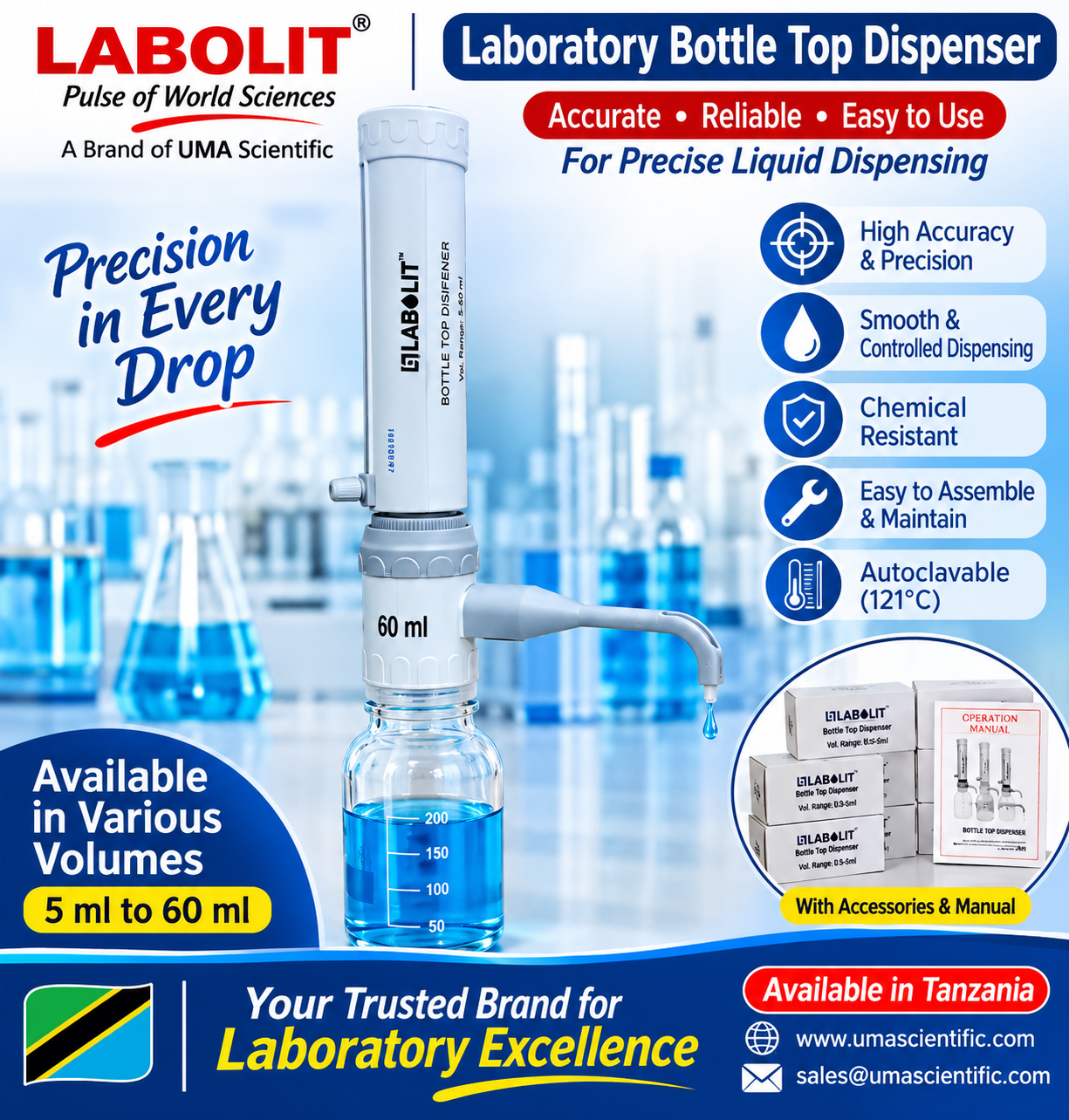
Laboratories across Tanzania use liquid dispensing equipment for clinical testing, pharmaceutical research, chemical analysis, food testing, water quality monitoring, agricultural research, biotechnology, microbiology and educational experiments.
A laboratory liquid dispenser is an instrument designed to deliver a measured quantity of liquid from a container into another vessel.
Depending on its design, it may dispense liquid manually, mechanically or electronically. Different types of dispensers are designed for different applications, liquid volumes and laboratory requirements.
Laboratory liquid dispensers are commonly used for:
The correct instrument depends on the required dispensing volume, accuracy, liquid properties, chemical compatibility and laboratory procedure.
When searching for laboratory liquid dispensing equipment in Tanzania, buyers may use different product names.
The most relevant search terms include:
The phrase Laboratory Liquid Dispenser Tanzania is a useful primary keyword for a general article covering different liquid dispensing instruments.
For a product-specific page, use terms such as Bottle Top Dispenser Tanzania or Bottle Mounted Dispenser Tanzania.
Different laboratories require different types of dispensing equipment. Understanding the available options helps buyers choose the right product.
A bottle top dispenser is fitted directly onto the neck of a compatible reagent bottle. It is used to dispense a measured volume of liquid from the bottle through a dispensing mechanism.
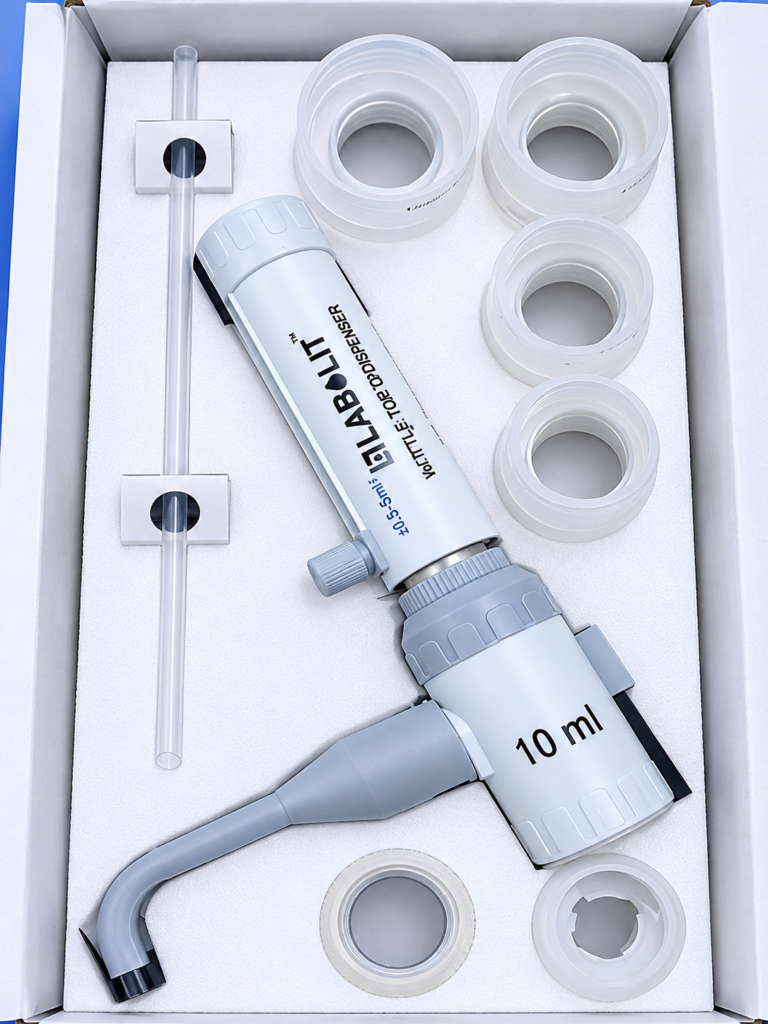
It is commonly used for repetitive dispensing of compatible laboratory reagents and solutions.
Applications include:
Bottle top dispensers are available in different capacities and dispensing ranges. Some models provide adjustable volume settings.
Buyers should check the chemical compatibility of all liquid-contacting parts before using a dispenser with a particular reagent.
A bottle mounted liquid dispenser is another commonly used name for a bottle top dispenser.
It is installed on a compatible laboratory bottle and helps dispense liquids without repeatedly pouring them manually.
Laboratories that require regular dispensing from reagent bottles may find this type of instrument convenient.
Popular related searches include:
A manual liquid dispenser uses a manually operated mechanism to dispense liquid.
It may be suitable for laboratories that require straightforward dispensing without electronic controls.

Depending on the design, manual dispensers may be used for routine liquid handling, reagent distribution and other laboratory applications.
Electronic dispensers use powered mechanisms and electronic controls to support liquid dispensing.
Buyers should compare the manufacturer’s specifications, electrical requirements, maintenance instructions and intended applications.
A reagent dispenser is used to dispense laboratory reagents and prepared solutions.
The correct model depends on the reagent, required volume, dispensing frequency and laboratory method.
Chemical liquid dispensers are designed for handling particular types of chemical liquids.
Chemical compatibility is especially important. The instrument must be approved for the specific chemical, concentration and operating conditions.
Never assume that a general-purpose dispenser is suitable for every acid, solvent or corrosive liquid.
Repeating dispensers are designed to deliver multiple measured portions of liquid.
They may be used in applications where repeated dispensing of the same volume is required.
Always review the manufacturer’s specifications to determine whether the instrument is appropriate for the intended laboratory procedure.
A suitable dispenser allows the operator to deliver a selected volume according to the instrument’s specifications.
A bottle-mounted instrument can dispense compatible liquids directly from a reagent bottle, reducing unnecessary transfers.
Repeated liquid dispensing can become easier when a suitable dispenser is selected for the laboratory’s routine requirements.
Manual pouring may require additional handling and measuring steps. A suitable dispenser can simplify some of these procedures.
Laboratories performing routine testing may benefit from dispensing equipment designed for repeated use.
Dedicated liquid dispensing equipment can support consistent laboratory workflows when properly maintained and operated.
Liquid dispensing instruments may support several of these activities.
Clinical and diagnostic laboratories use reagents, buffers and prepared solutions during routine testing.
Liquid dispensers may be used for compatible liquids in:
Pharmaceutical laboratories perform research, formulation development, testing and quality-control procedures.
Liquid dispensing equipment may be used for handling compatible reagents, solutions and solvents.
Educational institutions require laboratory equipment for practical classes, experiments and research.
Liquid dispensers may be useful in:
Food testing laboratories perform chemical analysis, quality checks and testing procedures.
Dispensing equipment may be used for preparing and handling compatible laboratory reagents.
Water testing facilities analyse drinking water, groundwater, wastewater and industrial water.
Liquid dispensers may be used to dispense compatible reagents during chemical testing and analysis.
Agricultural research facilities perform soil analysis, nutrient testing, fertiliser studies and other scientific procedures.
Laboratory dispensers may support repetitive reagent handling.
Environmental laboratories examine water, soil and other environmental samples.
Suitable liquid dispensing equipment can support the preparation and handling of laboratory solutions.
Manufacturing and processing companies may operate internal laboratories for testing raw materials, finished products and production samples.
Depending on the test procedure, laboratory liquid dispensers may be useful for controlled reagent dispensing.
Mining-related laboratories may conduct chemical analysis, mineral testing and material evaluation.
Dispensers used in these environments must be compatible with the specific chemicals and laboratory procedures.
One of the important buyer searches is Laboratory Liquid Dispenser Price in Tanzania.
The final cost depends on the instrument type, dispensing capacity, volume range, materials, accuracy specifications, brand, quantity, shipping and import-related expenses.
For imported laboratory equipment, buyers should consider the complete landed cost rather than only the product price.
1. Type of Dispenser
A manual bottle top dispenser, electronic dispenser and repeating dispenser may have different prices because their designs and operating functions are different.
2. Dispensing Capacity
The required volume range affects the model selection and price.
3. Material of Construction
Materials used in the liquid-contacting components are important for chemical compatibility, durability and safe operation.
4. Accuracy and Precision
Buyers should review the manufacturer’s stated accuracy and precision specifications. Instruments intended for demanding procedures may have different specifications and costs.
5. Brand and Manufacturing Quality
Product design, quality control, documentation and technical support can influence the purchase price.
6. Quantity Ordered
Laboratories purchasing individual units may have different commercial terms from distributors or institutional buyers ordering in bulk.
7. Shipping and Import Costs
For buyers in Tanzania, international freight, insurance, customs clearance, import duties, applicable taxes and local delivery may affect the total cost.
UMA Scientific can be contacted for product information and quotations for available laboratory liquid dispensing equipment.
When requesting a quotation, share:
This information helps the supplier understand the application and provide a more relevant quotation.
Selecting a laboratory liquid dispenser requires more than comparing prices. Buyers should evaluate the instrument according to their actual laboratory requirements.
Determine the volume of liquid that needs to be dispensed during the procedure.
Choose a model with a suitable dispensing range. Avoid selecting a model simply because it is inexpensive or has a larger capacity.
Chemical compatibility is one of the most important factors when buying a liquid dispenser.
Different chemicals can react with different materials. Check compatibility for:
Review the manufacturer’s chemical compatibility chart for the exact chemical and concentration.
Different applications require different levels of dispensing accuracy.
Review the manufacturer’s specifications and confirm that the instrument is suitable for your testing method.
For bottle top and bottle mounted dispensers, verify:
Understand how the instrument operates, how the volume is adjusted and how liquid is dispensed.
Review calibration instructions and maintenance requirements. Follow the manufacturer’s recommendations for calibration and performance checks.
The dispenser should be maintained according to the manufacturer’s instructions.
Ask about disassembly, cleaning, flushing, storage and replacement-part requirements.
A small educational laboratory may have different requirements from a busy pharmaceutical quality-control laboratory.
Select equipment based on dispensing frequency, liquid type and operating conditions.
Before purchase, request the relevant product datasheet, operating manual, specifications, warranty information and other available documentation.
Choose a supplier who can explain the product specifications, compatibility, maintenance and export requirements.
Dar es Salaam is one of Tanzania’s major commercial and industrial centres. It has hospitals, diagnostic laboratories, universities, pharmaceutical businesses and industrial facilities.
Buyers searching for laboratory dispensing equipment in Dar es Salaam may use the following keywords:
Relevant commercial and residential areas include:
Laboratories and distributors in these areas can enquire about suitable liquid dispensing products and international supply options.
Dodoma is Tanzania’s capital and an important location for government institutions, universities, healthcare facilities and research activities.
Laboratory buyers may search for:
Relevant areas include:
Arusha is an important regional centre for education, healthcare, agriculture, tourism-related services and research.
Potential search keywords include:
Relevant areas include:
Mwanza is a major commercial centre in the Lake Victoria region. Healthcare, education, food processing and industrial activities may create demand for laboratory equipment.
Related search keywords:
Relevant areas include:
Mbeya is an important regional centre with educational, agricultural, healthcare and commercial activities.
Search keywords:
Relevant areas include:
Morogoro has agricultural, educational, healthcare and research-related activities. Laboratories may require liquid dispensing instruments for routine scientific work.
Search keywords:
Relevant areas include:
Tanga is an important coastal city with commercial, industrial, educational and healthcare facilities.
Relevant search keywords:
Relevant areas include:
Zanzibar has healthcare facilities, educational institutions, food-related businesses and laboratories that may require scientific instruments.
Search keywords:
Relevant areas include:
Moshi is an important centre in the Kilimanjaro region, with healthcare, education and agricultural activities.
Search keywords:
Relevant areas include:
Iringa has educational, healthcare and agricultural facilities where laboratory equipment may be required.
Search keywords:
Relevant areas include:
Tabora is a regional centre with healthcare, education and commercial activities.
Search keywords:
Relevant areas include:
Kigoma is an important western Tanzanian centre. Laboratories serving healthcare, education and environmental activities may require liquid handling equipment.
Search keywords:
Relevant areas include:
Mtwara is a coastal regional centre with commercial, healthcare and industrial activities.
Search keywords:
Relevant areas include:
Laboratories and educational institutions in Singida may require scientific equipment for testing and research.
Search keywords:
Relevant areas include:
Bukoba is an important regional centre in the Kagera region.
Search keywords:
Relevant areas include:
Shinyanga has commercial, healthcare and industrial activities where laboratory testing may be required.
Search keywords:
Relevant areas include:
Musoma is a regional centre near Lake Victoria, with healthcare, education and commercial facilities.
Search keywords:
Relevant areas include:
Lindi has healthcare, educational and commercial facilities that may require laboratory equipment.
Search keywords:
Relevant areas include:
Songea is an important centre in the Ruvuma region, with educational, healthcare and agricultural activities.
Search keywords:
Relevant areas include:
Njombe has agricultural, educational and healthcare activities where scientific instruments may be required.
Search keywords:
Relevant areas include:
Sumbawanga is an important centre in the Rukwa region.
Search keywords:
Relevant areas include:
In addition to the major cities above, laboratory equipment buyers may search from other towns and districts.
Additional location-based keyword opportunities include:
These are location-based SEO keyword ideas, not verified search-volume rankings or proof of local supplier availability.
A laboratory liquid dispenser is a broad category. A bottle top dispenser is one specific type of liquid dispensing instrument.
| Equipment | Main Function | Typical Application |
|---|---|---|
| Bottle Top Dispenser | Dispenses liquid directly from a compatible bottle | Reagent dispensing |
| Bottle Mounted Dispenser | Alternative name for a bottle top dispenser | Routine liquid handling |
| Manual Liquid Dispenser | Uses a manual mechanism | General laboratory dispensing |
| Electronic Dispenser | Uses powered controls | Selected specialised procedures |
| Repeating Dispenser | Delivers repeated portions | Repetitive dispensing tasks |
| Micropipette | Measures and transfers small liquid volumes | Microlitre applications |
The correct equipment depends on the laboratory procedure. A bottle top dispenser should not be confused with a micropipette, burette or volumetric pipette.
Pharmaceutical laboratories need suitable liquid handling equipment for research, formulation, testing and quality control.
A liquid dispenser may be used for dispensing compatible reagents and solutions during routine procedures.
Before purchasing, pharmaceutical laboratories should check:
The equipment should meet the laboratory’s internal quality procedures and applicable regulatory requirements.
Universities and research organisations require dependable scientific instruments for practical classes, student projects and laboratory investigations.
Liquid dispensing instruments may be relevant to:
Educational institutions should select equipment based on the age and experience of users, laboratory safety procedures, operating frequency and intended experiments.
Water quality testing is important for public health, industrial operations and environmental monitoring.
Laboratories may test drinking water, groundwater, wastewater and industrial water samples.
Liquid dispensers can support the handling of compatible reagents used in certain testing methods.
When selecting equipment for water testing, consider:
Food testing laboratories perform a wide range of chemical and quality-control procedures.
They may analyse food ingredients, beverages, raw materials and finished products.
A suitable liquid dispenser can support the preparation and dispensing of compatible solutions and reagents.
Food testing facilities should ensure that the instrument is appropriate for the specific method and does not introduce contamination into the testing process.
Agricultural laboratories in Tanzania may perform soil nutrient testing, fertiliser evaluation, plant research and agricultural product analysis.
Liquid dispensers can support repetitive dispensing tasks during certain procedures.
The selected instrument must be suitable for the chemicals, volumes and testing methods used by the laboratory.
Correct operation and maintenance are essential for reliable laboratory work.
Cleaning requirements depend on the instrument and the liquid used.
Follow the manufacturer’s instructions for:
Never use an unsuitable cleaning solution or disassemble an instrument without following the manufacturer’s guidance.
Not all laboratory liquid dispensers are suitable for every chemical.
Before dispensing an acid, base, solvent or corrosive reagent, confirm that the instrument’s complete liquid-contacting path is compatible with the exact chemical and concentration.
When purchasing laboratory equipment, buyers should consider more than the initial purchase price.
A dependable supplier should provide clear product information and help buyers understand whether an instrument is suitable for their intended application.
Important purchasing considerations include:
For Tanzanian importers and distributors, it is also important to confirm the complete commercial terms before placing an order.
UMA Scientific is associated with the LABOLIT PVT LTD brand and supplies laboratory equipment and scientific instruments from India.
The company serves laboratory buyers, distributors, dealers and institutional customers looking for scientific products.
Tanzanian customers can contact UMA Scientific to enquire about available laboratory liquid dispensing products and other laboratory equipment, subject to current availability and export arrangements.
Depending on current product availability, customers may enquire about:
Laboratories and distributors can contact UMA Scientific for:
For a more accurate quotation, share the required product, dispensing volume, quantity and delivery location.
Tanzanian laboratories and distributors may consider international suppliers when sourcing scientific instruments.
The following steps can help organise the purchasing process.
Determine whether you need a bottle top dispenser, bottle mounted dispenser, manual liquid dispenser or another type of instrument.
Share the required dispensing range, volume, accuracy and intended application.
Provide information about the liquid or reagent to be dispensed. Confirm compatibility with the supplier and manufacturer.
Ask for the product price, quantity-based terms, packing details and quotation validity.
Discuss the delivery destination, freight method, estimated transit arrangements and applicable export documentation.
Before ordering, confirm Tanzania’s current import requirements, applicable taxes, customs duties and any product-specific documentation requirements with the relevant authorities or your customs clearing agent.
Review the final product specifications, quantity, commercial terms and shipping details before confirming the order.
A laboratory liquid dispenser is an instrument used to deliver measured quantities of liquid during laboratory procedures.
Depending on its design, it may be called a bottle top dispenser, bottle mounted dispenser, reagent dispenser, chemical dispenser or laboratory liquid dispenser.
A bottle top dispenser is fitted directly onto a compatible reagent bottle and dispenses liquid through a controlled mechanism.
Yes. These terms commonly refer to the same general type of laboratory dispensing instrument.
The price depends on the type, dispensing capacity, specifications, brand, quantity, shipping and import costs. Request a current quotation for the required model.
You can contact laboratory equipment distributors and suppliers serving Tanzania or enquire with international suppliers that offer export arrangements.
You can enquire with Indian suppliers about product availability, export documentation, shipping and delivery arrangements to Tanzania.
Clinical, pharmaceutical, chemical, biotechnology, educational, food testing, water testing, agricultural and industrial laboratories may use liquid dispensing instruments.
Only when the exact model and all liquid-contacting materials are confirmed compatible with the particular acid and concentration.
Some dispensers are compatible with certain solvents. Always check the manufacturer’s compatibility information before use.
A liquid dispenser is generally used to dispense measured quantities of liquid from a container. A micropipette is designed to measure and transfer small liquid volumes, commonly in microlitres.
A bottle top dispenser is fitted to a reagent bottle for dispensing liquid. A burette is a graduated measuring instrument commonly used in titration procedures.
Yes. Different models have different dispensing capacities and volume ranges. Check the manufacturer’s specifications before selection.
Check the volume range, accuracy, chemical compatibility, bottle compatibility, materials, maintenance, calibration, documentation and warranty.
Universities and educational institutions can enquire with laboratory equipment suppliers about suitable models, specifications and institutional quotations.
Yes. Distributors and importers can share their required quantity and product specifications when requesting a quotation.
It may be suitable for specific pharmaceutical laboratory applications if its specifications, compatibility and documentation meet the laboratory’s requirements.
It may be used for dispensing compatible reagents during water testing procedures. The selected model must meet the requirements of the particular testing method.
Yes. Follow the manufacturer’s cleaning, inspection, storage and maintenance instructions.
UMA Scientific can be contacted for product availability, specifications and export enquiries. Shipping and supply arrangements should be confirmed for each order.
Are you looking for a Laboratory Liquid Dispenser in Tanzania for your hospital, diagnostic laboratory, university, pharmaceutical company, research centre or industrial testing facility?
Contact UMA Scientific, India, for information about available laboratory liquid dispensers, bottle top dispensers and other scientific instruments.
We welcome enquiries from:
UMA SCIENTIFIC – Pulse of World Science
Brand: LABOLIT PVT LTD
Country: India
Email: sales@umascientific.com
Website: www.umascientific.com
For a quotation, please share your required dispenser type, dispensing volume, quantity and delivery location in Tanzania.
Laboratory Liquid Dispenser Tanzania – Price, Types, Uses & Supplier
Laboratory Liquid Dispenser Tanzania, Liquid Dispenser Tanzania, Laboratory Equipment Tanzania, Bottle Top Dispenser Tanzania, Bottle Mounted Dispenser Tanzania, Reagent Dispenser Tanzania, Chemical Dispenser Tanzania, Laboratory Supplier Tanzania, Laboratory Equipment Supplier Tanzania, Liquid Handling Equipment Tanzania, Pharmaceutical Laboratory Equipment, UMA Scientific, LABOLIT PVT LTD.
