

Leading Micropipette & Scientific Lab, Medical instrument Manufacturer and Deler A Legacy Of Scientific Precision .



Leading Micropipette & Scientific Lab, Medical instrument Manufacturer and Deler A Legacy Of Scientific Precision .
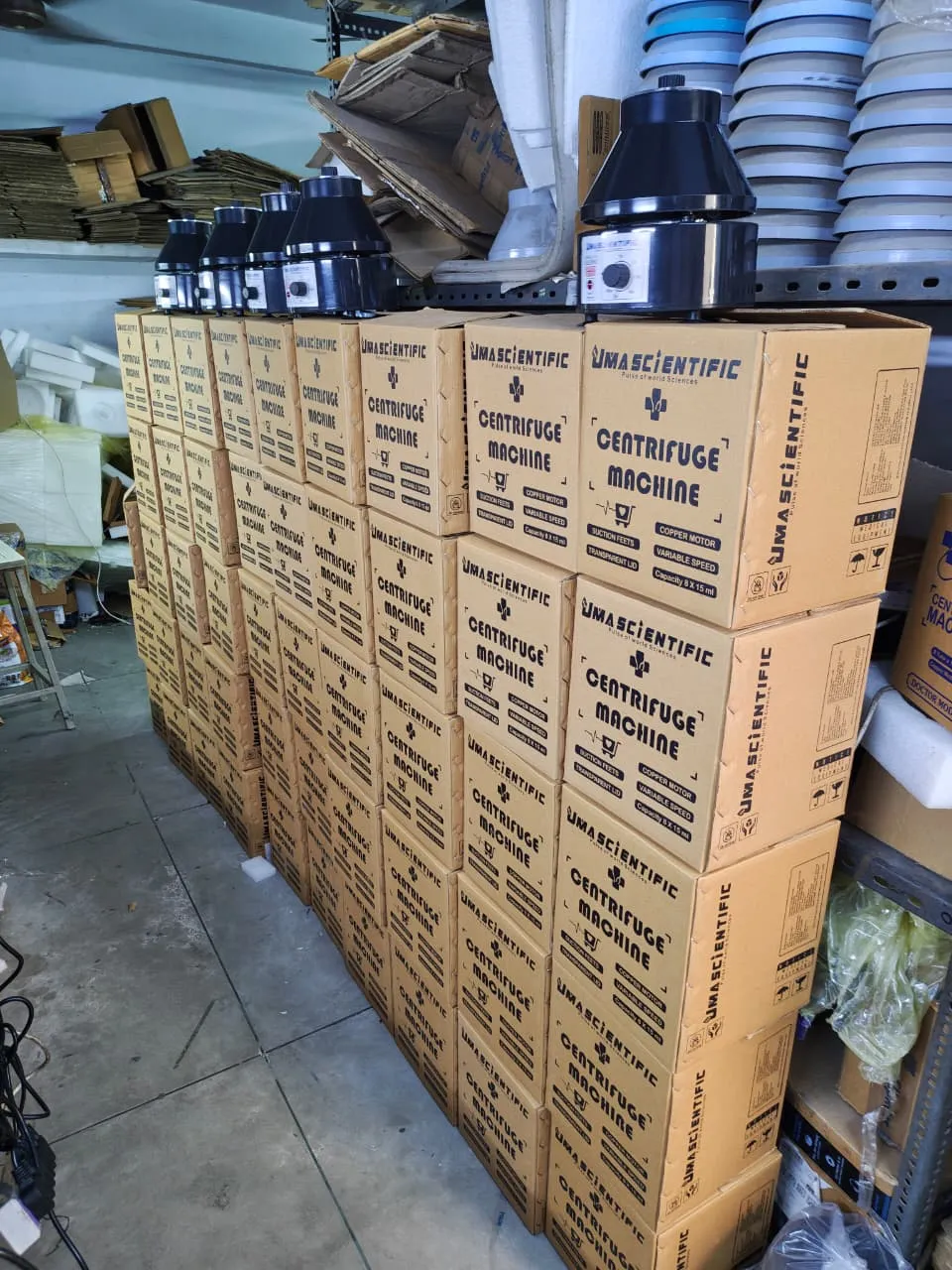
Centrifuge Machine Manufacturer in India | Laboratory Centrifuge Machine | Doctor Centrifuge Machine | Medical Centrifuge | Pathology Centrifuge | Blood Centrifuge | Centrifuge Machine Supplier | Centrifuge Machine Price
A centrifuge machine is one of the most commonly used instruments in medical laboratories, pathology laboratories, diagnostic centers, hospitals, research laboratories, pharmaceutical laboratories, veterinary laboratories, educational institutions, and healthcare facilities. It is used to separate components of a liquid sample by applying centrifugal force.
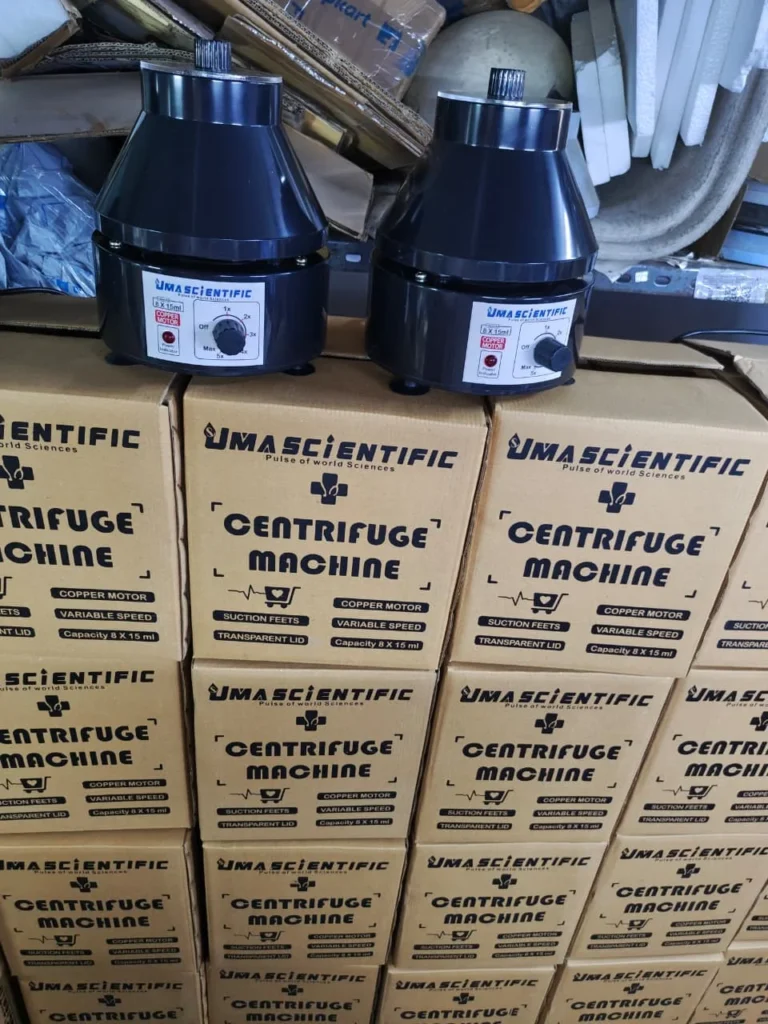
UMA SCIENTIFIC is engaged in supplying scientific and laboratory equipment for laboratories, hospitals, diagnostic centers, educational institutions, research facilities, dealers, distributors, and other users.
A centrifuge machine is designed to provide controlled rotational movement to samples placed in tubes. This rotational movement generates centrifugal force, helping separate components according to differences in density.
A laboratory centrifuge can be used for applications such as:
The correct centrifuge should always be selected according to the sample type, tube size, required speed, rotor configuration, capacity, and intended application.
A centrifuge machine is laboratory equipment that uses centrifugal force to separate materials within a liquid suspension.
For example, when blood is centrifuged, its components can be separated into different layers depending on the sample and centrifugation conditions.
A typical centrifuge machine consists of:
The exact construction differs between centrifuge models.
The basic principle of centrifugation is relatively simple.
The required sample is placed into a compatible centrifuge tube.
The tubes are placed into the centrifuge rotor or tube holders.
Tubes should be balanced correctly before starting the centrifuge.
Depending on the machine, the operator sets speed, time, or other required parameters.
The motor rotates the rotor and generates centrifugal force.
Different components of the sample separate according to their physical properties and the centrifugation conditions.
After the programmed cycle is complete, the rotor stops. The operator can then carefully remove the tubes.
Balancing is one of the most important operating practices when using a centrifuge machine.
If tubes are placed unevenly, the rotor can experience an imbalance. This can result in:
For example, if two tubes are placed opposite each other, their masses should be appropriately matched.
Never operate a centrifuge with an improperly balanced rotor.
A doctor centrifuge machine is a common term used in India for compact centrifuges used in clinics, pathology laboratories, medical practices, and diagnostic facilities.
Doctor centrifuges are generally used for routine sample separation applications.
Depending on the model, a doctor centrifuge may provide:
When buying a doctor centrifuge, users should check the exact rotor capacity, maximum speed, tube compatibility, timer range, and other specifications instead of relying only on the product name.
A laboratory centrifuge machine is designed for separating components of laboratory samples.
Laboratory centrifuges are available in different sizes and configurations to meet different requirements.
Common applications include:
A laboratory may require a basic centrifuge for routine testing or a specialized centrifuge for advanced research.
A medical centrifuge machine is used in healthcare and clinical laboratory environments for sample processing.
Common medical applications include:
Medical laboratories should choose a centrifuge based on their specific test procedures and validated laboratory protocols.
Pathology laboratories routinely process blood, urine, and other biological samples.
A pathology centrifuge machine helps separate sample components before further examination or testing.
The appropriate centrifugation speed and time depend on the specific sample and laboratory procedure. Operators should use validated protocols rather than applying one setting to every sample.
A pathology centrifuge can be useful for:
A blood centrifuge machine is commonly used for processing blood samples.
Blood contains several components, including cellular components and plasma. Centrifugation can help separate these components when performed according to the relevant laboratory protocol.
The result depends on:
Therefore, laboratories should follow the centrifugation parameters specified for the particular test or procedure.
A serum centrifuge machine can be used to assist with serum preparation from appropriately collected blood samples.
After blood collection and any required clotting period, the sample can be centrifuged according to the laboratory’s validated procedure.
The separated serum can then be used for appropriate laboratory testing.
Centrifugation is also used for plasma preparation.
The exact centrifugation procedure depends on:
Laboratory professionals should follow the test manufacturer’s instructions and the laboratory’s SOP.
Diagnostic laboratories need reliable sample-processing equipment for routine testing.
A centrifuge can support diagnostic workflows by helping separate samples before analysis.
Diagnostic laboratories may use centrifuges for:
When selecting a centrifuge for a diagnostic center, consider both current and future workload.
Hospitals may use centrifuges in multiple departments and laboratory sections.
Depending on the hospital’s requirements, centrifuges can be used in:
For hospital procurement, specifications should be reviewed carefully, including capacity, speed, rotor type, safety features, warranty, service availability, and documentation.
Blood banks use specialized equipment and procedures for handling blood and blood components.
Centrifugation may be involved in sample preparation and component-processing workflows.
The exact centrifuge required for a blood bank depends on the intended procedure. A routine laboratory centrifuge should not automatically be assumed suitable for every blood-bank application.
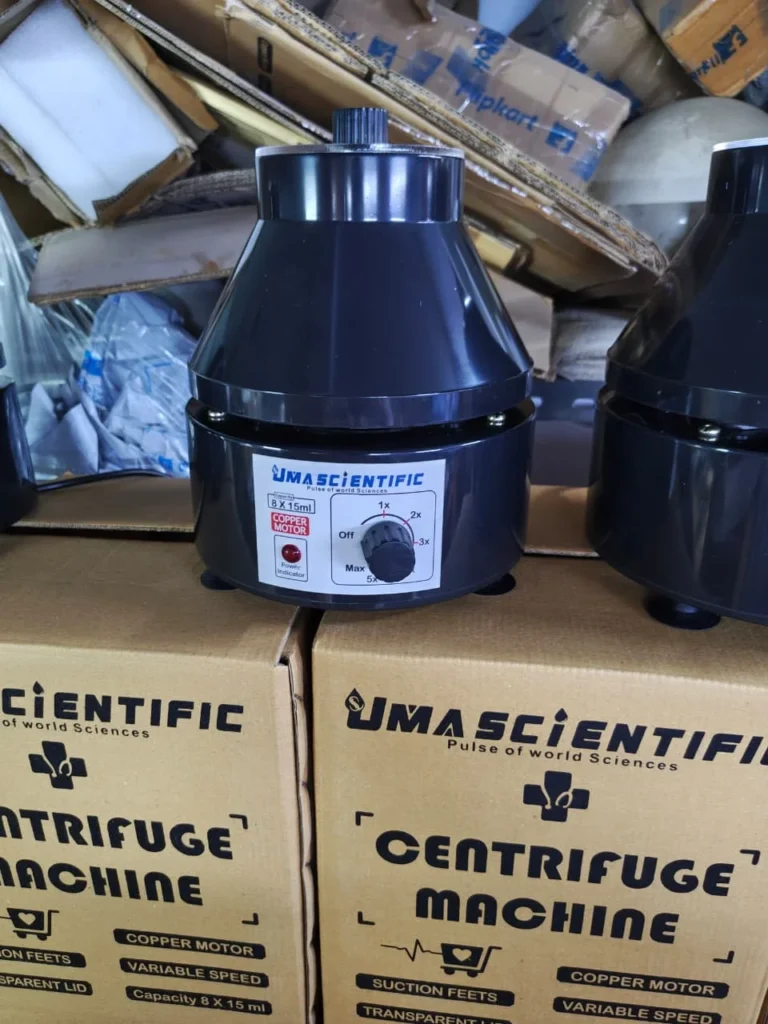
Research laboratories can require centrifuges with more advanced specifications.
Depending on the research application, laboratories may require:
Research laboratories should select equipment according to their experimental protocols.
Pharmaceutical laboratories may use centrifugation during sample preparation, testing, research, and quality-control activities.
Potential applications include:
The appropriate centrifuge depends on the material being processed and the laboratory method.
Biotechnology applications can involve cells, biological fluids, microorganisms, proteins, and other samples.
Different biotechnology protocols may require very different centrifugation conditions.
Before purchasing a centrifuge, researchers should check:
There are many types of centrifuge machines available for different applications.
Compact centrifuges commonly used for routine clinical and pathology applications.
General-purpose laboratory centrifuge for routine sample separation.
Designed for clinical and diagnostic laboratory applications.
Used when higher centrifugal force is required.
Designed primarily for small-volume tubes such as microtubes.
Provides temperature-controlled centrifugation for samples requiring temperature management.
Uses a digital control interface or display for setting or monitoring operating parameters.
Compact centrifuge designed to be placed on a laboratory workbench.
Used in workflows involving platelet-rich plasma where the specific centrifuge configuration is appropriate for the validated protocol.
Used for blood sample processing and separation.
A benchtop centrifuge machine is designed to fit on a laboratory workbench.
These centrifuges are useful where laboratory space is limited.
Advantages can include:
Before purchasing, measure the available bench space and confirm electrical requirements.
A digital centrifuge provides an electronic interface for operating parameters.
Depending on the model, the display may provide information such as:
Digital controls can be particularly useful when laboratories need repeatable settings.
A high-speed centrifuge can generate substantially higher centrifugal force than many basic laboratory centrifuges.
High-speed equipment is generally selected for applications where the required separation cannot be achieved with a lower-speed machine.
When comparing centrifuges, do not compare RPM alone.
A more useful parameter for many applications is RCF (Relative Centrifugal Force).
RPM means revolutions per minute. It describes how fast the rotor is spinning.
RCF describes the centrifugal force applied to the sample and depends on both rotor speed and rotor radius.
Therefore, the same RPM can generate different RCF values on different rotors.
A commonly used relationship is:
RCF = 1.118 × 10⁻⁵ × r × RPM²
where:
For laboratory methods, use the required RCF or RPM and rotor specification given by the validated procedure.
The term 5000 RPM centrifuge machine is frequently used by buyers searching for a centrifuge capable of operating up to approximately 5000 revolutions per minute.
However, buyers should check:
A machine’s actual suitability depends on the required application rather than RPM alone.
A 5000 RPM-class centrifuge can be suitable for a range of routine laboratory applications depending on its rotor and specifications.
Before selecting a 5000 RPM machine, determine the required centrifugal force for the laboratory method.
A higher RPM does not automatically mean better performance for every application.
For businesses targeting search traffic around centrifuge machines, relevant keyword groups include:
The centrifuge machine price in India depends on several factors.
Important price factors include:
A basic doctor centrifuge and an advanced refrigerated high-speed centrifuge serve very different purposes and therefore should not be compared only on price.
For bulk orders, laboratories and distributors can request a quotation based on the required model and quantity.
Choosing the correct centrifuge requires understanding your application.
Determine whether you are processing:
Check the exact tubes used in your laboratory.
Calculate how many samples need to be processed per cycle.
Check the validated procedure for RPM or RCF.
The rotor is a critical part of the centrifuge.
Determine the required timing range.
Look for appropriate lid and operational safety features.
A busy diagnostic laboratory may require a different configuration from a small clinic.
Check warranty and after-sales support.
For institutional purchasing, request technical specifications and applicable documentation.
The rotor is one of the most important components of a centrifuge.
The rotor holds the tubes while the motor rotates it.
Common rotor configurations include:
Tubes remain at a fixed angle during centrifugation.
Tube carriers swing outward during operation.
Each design provides different separation characteristics.
When purchasing a centrifuge, always confirm the rotor configuration and compatible tubes.
Centrifuges can have different capacities.
Examples may include configurations for:
The actual capacity must be checked from the manufacturer’s specifications.
A compact copper centrifuge machine can be used for routine laboratory applications where a simple and economical configuration is required.
UMA SCIENTIFIC offers laboratory equipment including centrifuge machines for healthcare and laboratory applications.
For buyers looking for a copper centrifuge, important specifications to verify include:
A compact centrifuge is useful for laboratories where bench space is limited.
A smaller machine may be suitable for:
However, compact size should not be confused with universal suitability. Always match the centrifuge specification with the application.
Serum separation is one of the common laboratory applications associated with centrifugation.
The sample should be collected into an appropriate tube and processed according to the test laboratory’s validated procedure.
The required centrifugation conditions can vary depending on:
Always follow the relevant laboratory SOP and test manufacturer’s instructions.
Centrifugation may be used in urine laboratory procedures to concentrate sediment for microscopic examination.
The exact method should follow the laboratory’s validated protocol.
A centrifuge used for urine processing should have compatible tubes and suitable operating controls.
Research applications can range from basic sample preparation to sophisticated separation procedures.
Researchers may require:
For advanced research, buyers should discuss the application with the centrifuge manufacturer or technical supplier before purchasing.
A centrifuge rotates samples at high speed and must therefore be operated carefully.
Possible causes include:
Stop the centrifuge and investigate the cause according to the manufacturer’s instructions.
Possible causes can include:
Do not continue operation if the machine shows abnormal behavior.
Possible reasons may include:
Check the validated laboratory procedure.
Regular maintenance helps maintain reliable operation.
A basic maintenance routine can include:
The maintenance schedule should always follow the specific centrifuge manufacturer’s instructions.
Medical laboratories require equipment that matches their testing workflow.
Before purchasing, consider:
Sample Type → Tube Type → Capacity → RCF/RPM → Time → Rotor → Safety → Maintenance → Warranty
This approach can help laboratories select a centrifuge based on actual requirements rather than simply choosing a machine based on price.
A pathology laboratory may use centrifuges as part of sample preparation.
Typical requirements can include:
The required machine should be selected according to the laboratory’s actual workload and validated methods.
Small clinics often require compact equipment for routine sample processing.
A doctor centrifuge or compact laboratory centrifuge may be considered depending on the clinic’s procedures.
Important factors include:
Medical colleges may use centrifuges for both teaching and laboratory activities.
Applications can include:
Educational institutions may require multiple centrifuges depending on student numbers and laboratory requirements.
Veterinary laboratories also use centrifugation for sample preparation.
Depending on the laboratory procedure, centrifugation can be used with:
The centrifuge should be selected according to the veterinary laboratory’s protocols.
When selecting a centrifuge machine supplier in India, buyers should consider the complete supply package.
Ask for:
For institutional and bulk requirements, provide the supplier with the exact quantity and delivery location.
Customers searching for:
can contact UMA SCIENTIFIC for current product information and quotations.
For laboratories, clinics, hospitals, educational institutions, and dealers in Lucknow, local sourcing can provide advantages such as easier communication and convenient commercial coordination.
Potential buyers can enquire about:
Customers searching for centrifuge machine suppliers in Delhi may require laboratory centrifuges for hospitals, diagnostic centers, pathology laboratories, medical colleges, and research facilities.
When purchasing from any supplier, verify the machine’s specifications, warranty, delivery terms, and after-sales support.
Mumbai has a large healthcare, pharmaceutical, research, and diagnostic laboratory market.
Centrifuge machines may be required for:
Buyers should select the machine according to their exact application.
Bengaluru has extensive biotechnology, healthcare, pharmaceutical, research, and laboratory activity.
Centrifuge requirements can range from routine clinical centrifuges to advanced research centrifuges.
The required rotor, speed, RCF, temperature, and capacity should be specified before purchasing.
Hyderabad laboratories, hospitals, pharmaceutical companies, research institutions, and diagnostic centers may require different centrifuge configurations.
The appropriate model depends on the sample and procedure.
Centrifuges are used across medical laboratories, hospitals, research facilities, educational institutions, and pharmaceutical laboratories in Chennai.
Buyers should compare technical specifications and service terms before ordering.
Laboratories and healthcare institutions in Kolkata may require centrifuges for routine and specialized laboratory work.
A suitable machine should be selected based on sample type, tube capacity, RPM/RCF, and application.
Pune’s pharmaceutical, biotechnology, healthcare, and educational sectors create demand for different types of laboratory equipment.
Centrifuge machines can be used for sample preparation, research, and routine testing.
Ahmedabad laboratories, pharmaceutical companies, hospitals, and educational institutions may require laboratory centrifuges for different applications.
Buyers should identify their exact laboratory requirements before purchasing.
Hospitals, pathology laboratories, clinics, and educational institutions in Jaipur may use doctor and laboratory centrifuges for routine sample processing.
Diagnostic laboratories, clinics, hospitals, and research facilities in Surat can require centrifugation equipment for sample preparation.
Lucknow is an important healthcare and medical education center in Uttar Pradesh.
Centrifuges are commonly relevant to:
UMA SCIENTIFIC supplies scientific and laboratory equipment from Lucknow.
For SEO and local search, businesses can target location-specific keywords based on their actual supply and service coverage.
Scientific equipment dealers and distributors can include centrifuge machines in their laboratory equipment portfolio.
Dealer enquiries may include:
For dealership or bulk supply, commercial terms should be discussed directly with the supplier.
Bulk centrifuge requirements may come from:
For bulk quotation, buyers should mention:
Quantity + Required Model + Delivery City + GST Requirement + Any Technical Specification
This helps the supplier prepare an appropriate quotation.
OEM requirements can involve manufacturing or supplying equipment under another company’s brand, depending on the supplier’s capabilities and commercial terms.
Businesses interested in OEM supply should discuss:
OEM arrangements should be confirmed in writing before production.
Schools, colleges, universities, medical colleges, and technical institutions may use centrifuges for laboratory demonstrations and practical education.
Students can learn about:
Training should always be supervised by qualified teaching or laboratory staff.
A centrifuge provides several practical benefits in laboratory workflows.
Centrifugation can accelerate separation compared with gravity alone.
The operator can use defined speed and time parameters.
The same machine can support several suitable laboratory procedures.
Centrifuges are useful for daily sample preparation in many laboratories.
Benchtop and doctor centrifuges can be suitable where space is limited.
Laboratories can choose from basic to advanced models depending on their requirements.
Before purchasing, ask the supplier these questions:
A low purchase price is not necessarily the only consideration.
Compare:
Price + Capacity + Speed + RCF + Rotor + Safety + Warranty + Service + Accessories + Operating Cost
For a busy laboratory, a machine that matches the workflow can be more practical than selecting purely on initial purchase price.
Warranty terms vary by manufacturer and model.
Before purchasing, confirm:
Keep the invoice and warranty documents safely for future reference.
Cleaning procedures depend on the manufacturer’s instructions.
General laboratory practice includes:
Never use cleaning chemicals that could damage the rotor, seals, coatings, or other components.
For consistent operation:
A centrifuge machine is used to separate components of liquid or suspended samples using centrifugal force.
A doctor centrifuge is a commonly used term for a compact centrifuge intended for routine medical, clinical, pathology, and sample-separation applications.
A laboratory centrifuge is equipment used to separate or process samples in laboratory applications.
The price varies according to type, speed, capacity, rotor, controls, construction, accessories, and quantity.
It is a centrifuge capable of operating at speeds up to approximately 5000 revolutions per minute, subject to its specifications.
No. RPM and RCF are different measurements. RCF depends on RPM and rotor radius.
Yes, centrifugation is commonly used in blood sample processing, provided the centrifuge and procedure are appropriate for the application.
Yes, appropriate centrifugation procedures can be used for serum preparation.
Yes, centrifugation is used for plasma preparation under appropriate laboratory procedures.
Proper balancing and following the manufacturer’s operating instructions are essential. Never open or interfere with a centrifuge while the rotor is moving.
RCF stands for Relative Centrifugal Force and represents the force applied to the sample relative to gravity.
RPM means revolutions per minute and describes the rotational speed of the rotor.
They are not competing measures. RPM describes rotational speed, while RCF describes centrifugal force. Laboratory protocols may specify either or both.
A benchtop centrifuge is designed to sit on a laboratory workbench and generally has a compact footprint.
Yes, where the centrifuge’s specifications are suitable for the clinic’s procedures.
Yes. Pathology laboratories commonly use centrifugation for suitable sample-preparation procedures.
Yes. Hospitals, laboratories, institutions, dealers, and distributors can request bulk quotations.
Samples should be arranged according to the rotor manufacturer’s instructions, with appropriately matched masses positioned to balance the rotor.
Maintenance frequency depends on the model, usage, manufacturer recommendations, and laboratory environment.
Check capacity, tube compatibility, RPM, RCF, rotor, timer, safety, electrical requirements, warranty, service, and price.
Indian laboratory equipment suppliers can provide products for a wide range of local laboratory applications.
When selecting an Indian supplier, buyers can verify:
For institutional buyers, technical compliance should be checked against the procurement specification.
UMA SCIENTIFIC supplies scientific and laboratory equipment for different laboratory and healthcare applications.
Our product range includes:
We cater to requirements from laboratories, hospitals, clinics, diagnostic centers, medical colleges, research institutions, dealers, distributors, and other organizations.
If you are searching for a centrifuge machine manufacturer in India, doctor centrifuge machine supplier, laboratory centrifuge machine, medical centrifuge, pathology centrifuge, or centrifuge machine for bulk order, contact UMA SCIENTIFIC for current product details and quotation.
Hospitals | Pathology Labs | Diagnostic Centers | Clinics | Medical Colleges | Research Laboratories | Pharmaceutical Laboratories | Veterinary Labs | Dealers | Distributors | Institutions
For a quotation, share your:
Required Model + Quantity + Delivery Location
and the supplier can provide the relevant commercial and technical information.
A centrifuge machine is an essential laboratory instrument used for controlled separation and sample preparation. From small clinics and pathology laboratories to hospitals, pharmaceutical companies, research institutions, and educational laboratories, centrifugation is used in many different workflows.
There is no single centrifuge model suitable for every application. The correct machine depends on the required sample type, tube size, capacity, RPM, RCF, rotor, timer, temperature requirements, safety features, and laboratory procedure.
For routine applications, a doctor centrifuge or compact laboratory centrifuge may be appropriate. More demanding applications may require high-speed, digital, refrigerated, or specialized centrifuge systems.
When purchasing a centrifuge machine in India, buyers should compare technical specifications, warranty, service, accessories, delivery, and price. Most importantly, the machine should be operated by trained personnel using appropriate laboratory procedures.
UMA SCIENTIFIC supplies centrifuge machines and other scientific laboratory equipment for customers across India. For current centrifuge machine price, bulk quantity, dealer supply, technical specifications, or quotation, contact UMA SCIENTIFIC.
centrifuge machine, centrifuge machine manufacturer, centrifuge machine manufacturer in India, centrifuge machine supplier, centrifuge machine supplier in India, centrifuge machine price, centrifuge machine price in India, laboratory centrifuge machine, laboratory centrifuge machine manufacturer, laboratory centrifuge machine price, doctor centrifuge machine, doctor centrifuge machine manufacturer, doctor centrifuge machine price, medical centrifuge machine, medical centrifuge manufacturer, pathology centrifuge machine, pathology centrifuge machine manufacturer, pathology centrifuge price, blood centrifuge machine, blood centrifuge machine manufacturer, serum centrifuge machine, plasma centrifuge machine, clinical centrifuge machine, high speed centrifuge machine, digital centrifuge machine, tabletop centrifuge machine, benchtop centrifuge machine, electric centrifuge machine, centrifuge machine India, centrifuge manufacturer India, centrifuge machine dealer, centrifuge machine distributor, centrifuge machine wholesale, centrifuge machine bulk supplier, centrifuge machine for hospital, centrifuge machine for laboratory, centrifuge machine for pathology lab, centrifuge machine for diagnostic center, centrifuge machine for blood testing, centrifuge machine for serum separation, centrifuge machine for plasma separation, centrifuge machine for clinic, centrifuge machine for medical college, centrifuge machine for research laboratory, centrifuge machine for pharmaceutical laboratory, 5000 rpm centrifuge machine, 5000 rpm centrifuge, centrifuge 5000 rpm price, laboratory centrifuge 5000 rpm, doctor centrifuge 5000 rpm, medical centrifuge 5000 rpm, centrifuge machine Lucknow, centrifuge machine Uttar Pradesh, centrifuge machine Delhi, centrifuge machine Mumbai, centrifuge machine Bengaluru, centrifuge machine Hyderabad, centrifuge machine Chennai, centrifuge machine Kolkata, centrifuge machine Pune, centrifuge machine Ahmedabad, centrifuge machine Jaipur, centrifuge machine Kanpur, centrifuge machine Noida, centrifuge machine Agra, centrifuge machine Varanasi, centrifuge machine Patna, centrifuge machine Chandigarh, centrifuge machine Indore, centrifuge machine Nagpur, centrifuge machine Surat, centrifuge machine Coimbatore, UMA Scientific centrifuge machine.
