

Leading Micropipette & Scientific Lab, Medical instrument Manufacturer and Deler A Legacy Of Scientific Precision .



Leading Micropipette & Scientific Lab, Medical instrument Manufacturer and Deler A Legacy Of Scientific Precision .
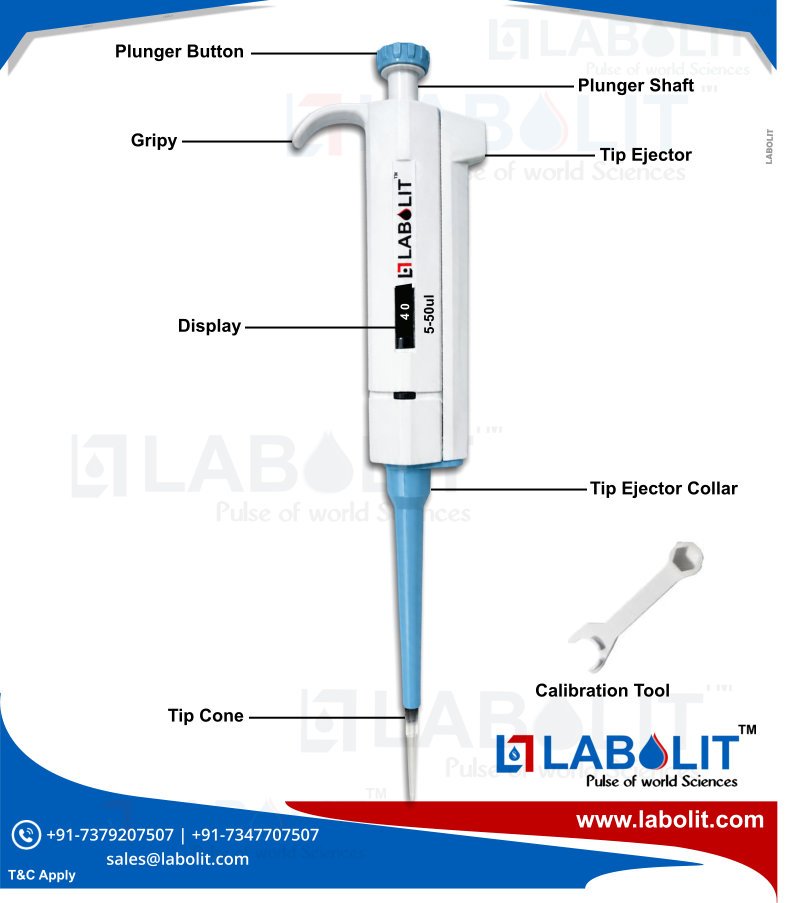
A high precision micropipette is designed to provide controlled liquid transfer through a carefully engineered piston-and-seal mechanism. Depending on the model, users can select fixed-volume or variable-volume micropipettes, single-channel or multichannel configurations, manual or electronic systems, and standard or fully autoclavable designs.
The term “micropipette” generally refers to pipettes used for small-volume liquid handling. Common laboratory ranges include:
The exact available volume ranges vary by manufacturer and model.
A high precision micropipette is not simply a plastic or mechanical device. It is a precision instrument in which the piston, seal, spring, tip cone, volume adjustment mechanism, display, and other components work together to deliver a controlled liquid volume.
For professional laboratory work, performance should be considered in terms of both accuracy and precision.
Accuracy describes how close the dispensed volume is to the intended or reference volume.
Precision describes how consistently repeated measurements are delivered.
A pipette can therefore be considered reliable only when it provides appropriate accuracy and repeatability for the intended application.
Modern laboratory processes frequently involve very small liquid volumes. In molecular biology, for example, a reaction may require only a few microlitres of a reagent. In diagnostic testing, precise sample and reagent volumes can be critical for dependable testing procedures. In pharmaceutical research, accurate liquid transfer supports reproducible experiments.
A high precision micropipette helps laboratories:
The importance becomes even greater when expensive reagents or limited biological samples are involved.
For example, if a laboratory uses a valuable enzyme or molecular biology reagent, inaccurate pipetting may lead to unnecessary wastage or an incorrect reaction composition. A suitable micropipette, used correctly and maintained properly, can help reduce these risks.
Most conventional manual micropipettes operate using an air-displacement principle.
Inside the pipette is a piston mechanism connected to a plunger. When the user presses and releases the plunger, the movement of the piston changes the air volume inside the pipette. This pressure difference causes liquid to enter or leave the disposable pipette tip.
The basic process includes:
Proper pipetting technique is essential because the performance of the instrument depends not only on its mechanical design but also on the user’s handling technique.
A micropipette consists of several precision components. The exact construction can differ according to the model and manufacturer.
The plunger is pressed by the user during aspiration and dispensing. Many manual micropipettes have two plunger positions or stops.
The first stop is commonly used during aspiration and initial dispensing, while the second stop may be used for blow-out during dispensing.
Variable-volume micropipettes have a mechanism for selecting the desired volume. The adjustment system may include a rotating volume knob and a locking mechanism.
The volume should always be set within the specified operating range of the pipette.
The display indicates the selected volume. Depending on the design, it may be mechanical or digital.
Users should understand the volume display before operating the instrument to prevent incorrect volume selection.
The tip cone is the portion where the disposable pipette tip is attached. Proper tip fit is important for reliable aspiration and dispensing.
Many micropipettes include a tip-ejection mechanism that allows the user to remove the used tip without touching it directly.
The piston is a critical internal component involved in controlling air displacement.
Seals and O-rings help maintain the appropriate internal conditions required for liquid aspiration and dispensing.
The spring provides controlled plunger movement and contributes to the operating feel of the instrument.
Ergonomic design can reduce hand fatigue during repeated pipetting operations.
Micropipettes are commonly available in fixed-volume and variable-volume designs.
A fixed-volume micropipette is designed to dispense one specified volume.
For example, a laboratory may use a fixed-volume pipette designed for 100 µL.
Fixed-volume pipettes are particularly useful where the same volume is repeatedly required.
A variable-volume micropipette allows the user to select a volume within a specified range.
For example:
A variable-volume micropipette is often preferred by laboratories where different liquid volumes are handled regularly.
A single channel micropipette has one tip cone and transfers liquid through one tip at a time.
It is widely used for:
Single-channel pipettes are especially useful when samples are handled individually or when wells are not arranged for multichannel operation.
A multichannel micropipette contains multiple tip channels. Common configurations include:
Multichannel micropipettes are particularly useful with microplates and high-throughput laboratory workflows.
They are widely used in molecular biology, ELISA workflows, cell culture applications, screening laboratories, and research environments.
Air-displacement pipettes are among the most commonly used manual micropipettes.
They use an air cushion between the piston and the liquid. These pipettes are suitable for many aqueous laboratory liquids and routine laboratory applications.
However, liquid properties can affect performance. Highly volatile, viscous, foaming, or temperature-sensitive liquids may require special techniques or suitable pipette designs.
Positive displacement pipettes use a piston arrangement that directly interacts with the liquid through the tip assembly.
They may be particularly useful for challenging liquids such as:
The appropriate pipette type should always be selected according to the liquid and application.
Manual pipettes are operated by pressing a mechanical plunger.
They are popular because they are:
Electronic pipettes use a motor-driven mechanism.
They can provide features such as:
The appropriate choice depends on laboratory workload, budget, application, and user preference.
Several factors influence micropipette performance.
The piston and sealing system should be manufactured to appropriate dimensional tolerances.
The volume-setting mechanism should provide clear and reliable adjustment.
A suitable pipette tip should fit the tip cone securely without leakage.
Regular calibration verification helps determine whether the pipette continues to perform within the required specification.
Even a high-quality micropipette can produce poor results if it is operated incorrectly.
Temperature differences between the liquid, pipette, tip, and environment can influence air-displacement pipetting performance.
Tips should be compatible with the micropipette and suitable for the intended application.
Accuracy and precision are fundamental concepts in liquid handling.
Suppose a user intends to dispense 100 µL.
If the pipette repeatedly dispenses values close to 100 µL, it demonstrates good accuracy and precision.
If repeated values are very close to each other but consistently far from 100 µL, the pipette may have good precision but poor accuracy.
If values are widely scattered and far from 100 µL, both accuracy and precision may be poor.
Therefore, laboratories should evaluate both parameters when selecting or maintaining a micropipette.
Laboratories often refer to ISO 8655 when discussing piston-operated volumetric apparatus, including piston-operated pipettes.
ISO 8655 establishes requirements and test methods relevant to piston-operated volumetric apparatus. Calibration and performance verification should be performed according to the applicable standard, manufacturer recommendations, laboratory quality system, and intended use.
It is important not to assume that every pipette automatically meets a specific accuracy value merely because it is described as “high precision.” Actual performance depends on the specific model, volume range, environmental conditions, tips, operating technique, maintenance condition, and calibration results.
Calibration is an important part of laboratory quality control.
Over time, a micropipette can experience changes in performance because of:
Calibration or performance verification can help determine whether the instrument remains within the required specification.
A common laboratory approach for assessing pipette volume is gravimetric testing. In simplified terms, a known volume of water is dispensed and weighed using an appropriate analytical balance under controlled conditions, with corrections considered according to the applicable procedure.
Calibration should be performed by qualified personnel or an appropriate calibration service according to the laboratory’s quality system.
Regular calibration can help laboratories:
The recommended calibration interval depends on usage frequency, laboratory requirements, risk assessment, manufacturer recommendations, and quality management procedures.
High-use laboratory pipettes may require more frequent checks than instruments used occasionally.
Even the best micropipette cannot compensate for poor technique.
Choose a pipette whose volume range appropriately covers the required volume.
Avoid using a large-volume pipette to measure extremely small volumes when a smaller-volume pipette is available.
Adjust the volume carefully and never exceed the specified range.
Attach the appropriate tip firmly. Avoid excessive force.
For many air-displacement applications, pre-wetting the tip can improve consistency by conditioning the air space inside the tip.
Press the plunger to the appropriate position, immerse the tip to a suitable depth, and release the plunger smoothly.
Keep the pipette reasonably vertical during aspiration to improve consistency.
Position the tip appropriately in the receiving vessel and press the plunger smoothly.
Dispose of the used tip appropriately.
Several common mistakes can reduce accuracy.
Selecting a pipette that is too large for the desired volume can reduce effective measurement performance.
Never set the pipette beyond its specified range.
Rapid operation can affect aspiration and dispensing consistency.
Too much or too little immersion can influence liquid uptake.
Air-displacement pipetting is sensitive to technique.
Tip reuse can create contamination and measurement problems.
Changing tips is important when cross-contamination is a concern.
Touching the tip can introduce contamination or alter the liquid volume.
Leaving a pipette exposed to contamination or storing it improperly can affect performance.
A pipette that has not been checked for an extended period may require performance verification.
A micropipette and its tip work as a system.
Even a well-calibrated pipette may not perform as expected if the tip is poorly fitted, damaged, contaminated, or incompatible.
Common laboratory tip colors include:
Color conventions can vary by manufacturer, so users should always verify the actual volume capacity and compatibility rather than relying solely on color.
Small-volume tips are designed for low-volume liquid handling.
A typical 10 µL micropipette may operate within a range such as 0.5–10 µL, depending on the model.
These tips are commonly used for:
A 200 µL micropipette tip is commonly associated with P200-class pipettes.
A typical operating range may be approximately 20–200 µL, depending on the instrument.
Applications include:
Blue tips are commonly associated with P1000-class pipettes, with typical operating ranges around 100–1000 µL depending on the model.
They are useful for:
Micropipette tips are available in different configurations.
These are suitable for many routine laboratory applications where sterility is not required.
Sterile tips are designed for applications where contamination control is important. They may be supplied using validated sterilization processes depending on the manufacturer and product specification.
Laboratories should verify the manufacturer’s documentation before making claims regarding sterility, pyrogen-free status, RNase/DNase-free status, or other specialized characteristics.
Filter tips contain a barrier intended to help reduce aerosol contamination entering the pipette.
They are particularly useful for sensitive molecular biology workflows and applications where contamination control is important.
Typical applications include:
The filter should not be treated as a substitute for proper laboratory contamination-control procedures.
Low-retention tips are designed to reduce liquid adhesion to the inner surface of the tip.
They can be useful when handling:
The benefit depends on the liquid, tip material, geometry, and application.
Some micropipettes have autoclavable components or are designed to tolerate steam sterilization according to the manufacturer’s instructions.
A fully autoclavable micropipette can be advantageous in laboratories where contamination control and sterilization are important.
However, users should always follow the manufacturer’s validated autoclaving procedure, including temperature, exposure time, disassembly requirements, and drying instructions.
Do not assume that every component of every micropipette can be autoclaved.
Laboratory professionals may perform hundreds or thousands of pipetting actions during a working day.
Therefore, ergonomic design is an important consideration.
Useful ergonomic features may include:
Ergonomics are especially important for laboratories performing repetitive liquid handling.
High precision micropipettes are used in a wide range of laboratory applications.
Micropipettes are essential for preparing DNA and RNA reactions, transferring buffers, enzymes, primers, and other reagents.
PCR workflows require accurate transfer of reaction components. Small volume differences can influence reaction composition, making reliable pipetting important.
Biotechnology laboratories use micropipettes for research, sample preparation, assay development, and experimental protocols.
Micropipettes are used for formulation research, analytical preparation, quality-control processes, and laboratory development activities.
Micropipettes are commonly used for controlled sample and reagent handling.
They can be used for sample preparation, reagent handling, and laboratory testing procedures.
Micropipettes support microbial culture preparation, dilution procedures, reagent transfer, and other laboratory operations.
Micropipettes may be used for transferring media, reagents, suspensions, and small liquid volumes.
Food laboratories use micropipettes for sample preparation, chemical testing, microbiological analysis, and quality control.
Micropipettes are used for water, soil, and environmental sample preparation.
Precision liquid handling supports various analytical and molecular workflows in forensic laboratories.
Universities and colleges use micropipettes in teaching laboratories, research projects, biotechnology programs, and scientific experiments.
Pharmaceutical laboratories require controlled and repeatable liquid handling during research and quality-control activities.
Micropipettes can be used for:
The specific suitability of a pipette depends on the laboratory’s validated procedure and quality requirements.
Diagnostic laboratories often handle biological samples and reagents in small volumes.
A reliable micropipette can support:
Proper contamination control and laboratory SOPs remain essential.
Research laboratories often require flexibility.
A variable-volume micropipette can be useful because researchers may work with different volumes during experimental development.
A laboratory may maintain several pipette ranges so that each measurement is performed with an appropriately sized instrument.
For example:
Choosing the right micropipette requires more than comparing prices.
First identify the smallest and largest volumes routinely used.
Select a pipette whose range closely matches the required working volume.
If the application is sensitive to volume variation, choose an instrument with documented performance appropriate for the procedure.
Repeated measurements should provide acceptable consistency.
Tip compatibility is essential.
For high-frequency use, operating force and hand comfort matter.
A manufacturer or supplier should ideally provide appropriate calibration or verification support.
If sterilization is required, select a model designed for the relevant procedure.
After-sales service can be important for professional laboratory equipment.
The purchase price is only one part of the cost. Tip consumption, maintenance, calibration, repair, and replacement should also be considered.
Purchasing laboratory equipment from an established Indian manufacturer can offer several practical advantages.
These may include:
For laboratories and distributors in India, local sourcing can simplify procurement.
Uma Scientific is a laboratory equipment company based in India offering laboratory instruments and liquid-handling products.
The company supplies products for laboratories, research institutions, pharmaceutical organizations, biotechnology facilities, diagnostic centers, hospitals, educational institutions, and other scientific users.
Micropipette product categories can include:
When purchasing any laboratory instrument, customers should review the exact technical specifications, volume range, accuracy and precision data, warranty conditions, and applicable documentation for the selected model.
LABOLIT is a micropipette brand associated with Uma Scientific.
The range can be selected according to laboratory requirements and may include different volume capacities and configurations.
Common volume ranges include:
Specialized ranges may also be available depending on the model.
The appropriate model should be selected based on the actual liquid-handling requirement rather than choosing a pipette solely on the basis of maximum capacity.
Quality in micropipette manufacturing involves multiple stages.
Suitable materials are selected for the body, tip cone, piston, seals, springs, and other components.
Plastic components require controlled manufacturing to ensure consistent dimensions.
The piston and sealing system must be assembled correctly.
The volume mechanism should operate smoothly and provide the required range.
Pipettes can be tested according to applicable internal or external procedures.
Where applicable, calibration and verification documentation can be provided according to the product and service arrangement.
Proper maintenance helps extend the working life of a micropipette.
Depending on the model:
Cleaning procedures depend on the design and contamination involved.
For routine external cleaning:
If liquid has entered the internal mechanism, the pipette may need to be disassembled and serviced according to the manufacturer’s instructions.
Do not immerse a micropipette in liquid unless the manufacturer specifically permits it.
Proper storage can help prevent contamination and mechanical damage.
A pipette should ideally be stored:
A micropipette stand helps keep pipettes organized and reduces the risk of accidental damage.
A laboratory pipette stand is a useful accessory for storing micropipettes.
A drawer-type or multi-position stand may provide:
For laboratories using multiple pipettes, a suitable stand can help keep the working area clean and organized.
Important accessories can include:
Using compatible accessories can help maintain reliable operation.
Medical and diagnostic laboratories may use micropipettes for a wide range of liquid-handling procedures.
Depending on the laboratory protocol, they can be used for:
The pipette should always be selected according to the validated laboratory procedure.
Biotechnology laboratories often handle very small volumes of biological materials and reagents.
High precision liquid handling supports:
Multichannel pipettes can be particularly helpful for workflows involving microplates.
Educational laboratories use micropipettes for teaching students fundamental laboratory techniques.
Students can learn:
A durable and easy-to-use micropipette can be beneficial for educational environments where many users may operate the instrument.
Research and development laboratories often need equipment that supports experimental flexibility.
Variable-volume pipettes are especially useful because researchers may adjust the volume according to experimental protocols.
For advanced R&D applications, laboratories may also require:
The price of a high precision micropipette in India varies according to several factors.
These include:
Therefore, buyers should compare the complete specification rather than comparing price alone.
For bulk purchases, institutional requirements, distributors, OEM customers, and tenders, manufacturers and suppliers may offer different commercial terms.
A reliable micropipette supplier should be able to provide clear information about:
Before placing a bulk order, laboratories and distributors should confirm all specifications in writing.
Government laboratories, universities, hospitals, research institutes, and public organizations may procure micropipettes through formal procurement systems or tenders.
For institutional procurement, important considerations may include:
The exact documentation should be confirmed according to the tender or procurement specification.
OEM supply can be useful for distributors and laboratory equipment companies that want micropipettes under their own brand.
Depending on the manufacturer’s capabilities, OEM arrangements may include:
OEM customers should confirm minimum order quantity, printing requirements, packaging specifications, lead time, and quality documentation before production.
Indian manufacturers and suppliers may also supply laboratory liquid-handling products to international markets.
For export orders, requirements may include:
Export customers should communicate their destination-country requirements before order confirmation.
Resolution and accuracy should not be confused.
Resolution refers to the smallest displayed or adjustable increment of volume.
Accuracy describes closeness to the intended value.
A pipette can have a fine volume adjustment but still require proper calibration and technique to achieve its specified accuracy.
Therefore, buyers should evaluate the complete performance specification.
Temperature can influence liquid handling.
For air-displacement pipettes, differences between the temperature of the pipette, tip, liquid, and environment can influence the air cushion and therefore the aspirated volume.
For demanding applications:
Not all liquids behave like water.
Liquid properties such as:
can influence pipetting performance.
For unusual liquids, laboratories may need specialized pipetting techniques or appropriate pipette systems.
Viscous liquids flow more slowly than water and can remain attached to the tip.
Examples may include:
Reverse pipetting or positive-displacement techniques may be appropriate for some applications, depending on the instrument and validated procedure.
Volatile liquids can evaporate into the air cushion of an air-displacement pipette.
This can influence aspiration accuracy.
For volatile liquids, laboratories should consider appropriate technique and pipette technology and follow manufacturer recommendations.
Cross-contamination is an important concern in laboratory liquid handling.
Good practices include:
A suitable high precision micropipette can provide numerous laboratory benefits.
Helps transfer the required liquid volume according to the instrument’s specifications.
Consistent pipetting technique and a well-maintained instrument can improve repeatability.
Accurate liquid handling can help reduce unnecessary reagent consumption.
Easy-to-use pipettes can make routine laboratory operations more efficient.
A comfortable instrument can reduce hand fatigue during repetitive use.
Variable-volume pipettes can handle multiple volumes.
Reliable liquid handling contributes to standardized laboratory workflows.
Modern laboratories increasingly require instruments that combine precision, reliability, ergonomics, and ease of maintenance.
A high precision micropipette should be selected according to actual application requirements.
There is no single pipette that is ideal for every laboratory task. A molecular biology laboratory may require small-volume pipettes and filter tips, while a general laboratory may need P200 and P1000 pipettes. A high-throughput laboratory may benefit from multichannel or electronic systems.
Therefore, laboratory managers should evaluate the complete workflow before purchasing.
A general selection approach is:
| Required Volume | Suitable Pipette Class |
|---|---|
| 0.1–2 µL | Very small-volume pipette |
| 0.5–10 µL | P10 |
| 2–20 µL | P20 |
| 5–50 µL | P50 |
| 10–100 µL | P100 |
| 20–200 µL | P200 |
| 50–500 µL | P500 |
| 100–1000 µL | P1000 |
| 1000–5000 µL | Large-volume pipette |
The actual selection should always be based on the manufacturer’s specified operating range.
Before purchasing a high precision micropipette, consider the following:
Users can improve liquid-handling consistency by following good laboratory practices.
Micropipettes should be used as laboratory instruments and handled according to laboratory safety procedures.
Important practices include:
The smaller the transferred volume, the more significant a small absolute error can become.
For example, an error of a few microlitres can represent a relatively small percentage at a larger volume but a much larger percentage when working at very low volumes.
This is why laboratories handling microlitre-scale reactions should use an appropriately sized micropipette and appropriate technique.
PCR is a strong example of an application where accurate liquid handling is important.
PCR reaction mixtures may contain:
The volumes can be small, and consistent preparation is important for reproducible experiments.
Small-volume pipettes are therefore commonly used in PCR workflows.
Molecular biology procedures often involve limited samples and small reagent volumes.
Micropipettes can be used for:
Filter tips may be appropriate where aerosol contamination is a concern.
ELISA procedures often involve microplates and repeated liquid transfer.
Multichannel micropipettes can improve efficiency when multiple wells are handled simultaneously.
Single-channel micropipettes may also be used for individual sample and reagent transfers.
Micropipettes may be used for small-volume cell culture-related tasks, including transferring reagents and preparing solutions.
For cell culture work, appropriate sterile consumables and aseptic techniques are essential.
Clinical research laboratories may use micropipettes for sample preparation, reagent handling, molecular assays, and other controlled liquid-handling procedures.
The instrument should be selected according to the laboratory protocol and quality-management system.
Micropipette technology continues to evolve.
Future laboratory liquid-handling systems are expected to increasingly emphasize:
Manual micropipettes will continue to remain important because they are versatile, accessible, and suitable for many routine laboratory procedures.
A high precision micropipette is a laboratory instrument designed to accurately and consistently transfer small volumes of liquid.
Common ranges include 0.5–10 µL, 2–20 µL, 5–50 µL, 10–100 µL, 20–200 µL, 50–500 µL, and 100–1000 µL, although exact ranges vary by manufacturer.
P10, P200, and P1000 generally refer to pipette classes associated with their approximate maximum volumes. The exact operating range depends on the specific model.
A P200-class micropipette with a range covering 200 µL is commonly used, provided that the specific application and required performance are suitable.
A compatible 1000 µL-class tip is commonly used with a P1000 pipette. Blue is a common color convention, but compatibility should always be confirmed with the manufacturer.
Disposable tips should generally not be reused where the product is specified for single use. Reuse can create contamination and performance risks.
Calibration frequency depends on usage, risk, laboratory requirements, manufacturer recommendations, and the quality-management system.
Yes, appropriately specified micropipettes are widely used for PCR preparation. Small-volume pipettes and suitable tips are commonly preferred.
A variable-volume micropipette allows users to select a volume within a defined operating range.
A fixed-volume micropipette is designed for one specified dispensing volume.
A multichannel micropipette contains multiple channels and can transfer liquid to several wells simultaneously.
Calibration or performance verification helps determine whether the instrument continues to deliver volumes within the required specification.
ISO 8655 is a standard series addressing piston-operated volumetric apparatus and associated requirements and test methods.
Some models are designed to be autoclavable, but the manufacturer’s specific instructions should always be followed.
The best pipette depends on volume, application, required accuracy and precision, liquid properties, workload, tip compatibility, ergonomics, and laboratory requirements.
A high precision micropipette for laboratory use is an essential instrument for accurate and controlled liquid handling. From pharmaceutical research and biotechnology to diagnostic laboratories, universities, hospitals, food testing, molecular biology, and clinical research, micropipettes support countless laboratory procedures.
Selecting the right pipette requires attention to volume range, accuracy, precision, ergonomics, tip compatibility, liquid properties, maintenance, calibration, and application requirements. A P10 may be appropriate for very small volumes, while P200 and P1000 pipettes can support larger microlitre-scale applications. Multichannel pipettes can improve efficiency in microplate workflows, while specialized tips and pipette technologies can support challenging applications.
Proper technique is equally important. Users should select the appropriate volume range, use compatible tips, aspirate and dispense correctly, avoid contamination, maintain suitable environmental conditions, and follow calibration and maintenance procedures.
For laboratories seeking reliable liquid-handling equipment, Uma Scientific offers laboratory equipment and micropipette solutions for research, diagnostic, pharmaceutical, biotechnology, educational, and other scientific applications. Micropipette products can be selected according to required volume ranges and laboratory requirements.
When purchasing a high precision micropipette, laboratories should focus not only on the purchase price but also on documented performance, tip compatibility, calibration support, warranty, service, durability, ergonomics, and long-term operating cost.
A properly selected, correctly operated, and regularly maintained micropipette can become one of the most valuable everyday instruments in a laboratory, helping users achieve controlled, consistent, and efficient liquid handling across a wide range of scientific applications.
For routine laboratory liquid handling, consider the following:
Small-volume applications: 0.5–10 µL or 2–20 µL micropipettes
Medium-volume applications: 10–100 µL or 20–200 µL micropipettes
Larger microlitre applications: 100–1000 µL micropipettes
High-throughput applications: 8-channel or 12-channel micropipettes
Sensitive applications: Filter tips and appropriate contamination-control procedures
Sterile applications: Suitable sterile tips and validated aseptic procedures
Repetitive work: Ergonomic or electronic micropipette options
Routine laboratory use: Reliable variable-volume single-channel micropipettes
Organized storage: Micropipette stands and drawer-type pipette holders
Uma Scientific is an India-based laboratory equipment company supplying scientific and laboratory products for a variety of professional applications. The product range includes micropipettes, micropipette tips, pipette stands, centrifuge machines, microscopes, vortex shakers, dry bath incubators, magnetic stirrers, pH meters, conductivity meters, bottle-top dispensers, and other laboratory equipment.
For micropipette requirements, customers can select suitable products according to volume range, configuration, application, and quantity.
Uma Scientific
Lucknow, Uttar Pradesh, India
Phone: 7379207507 | 7347707507
Email: sale.umascientific@gmail.com
