



Micropipette Guide 2025: Types, Applications, Usage & Calibration
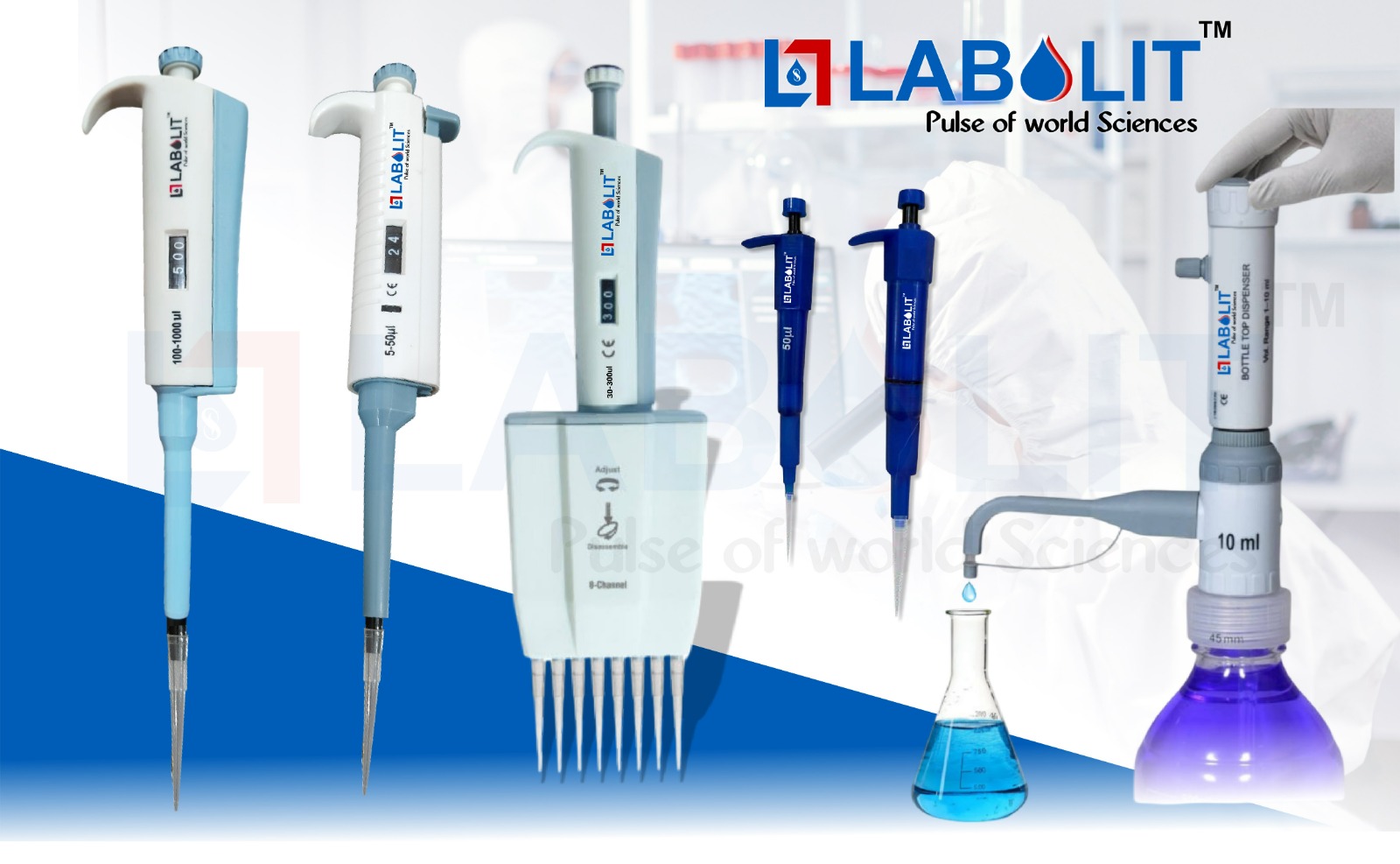
LABOLIT Micropipettes by UMA SCIENTIFIC
Micropipettes, commonly known as pipettes, are precision laboratory instruments used to measure and transfer small liquid volumes ranging from 1 µl to 10,000 µl. They are a fundamental part of liquid handling in scientific laboratories, including research institutes, diagnostic labs, pharmaceutical industries, biotechnology facilities, and educational institutions.
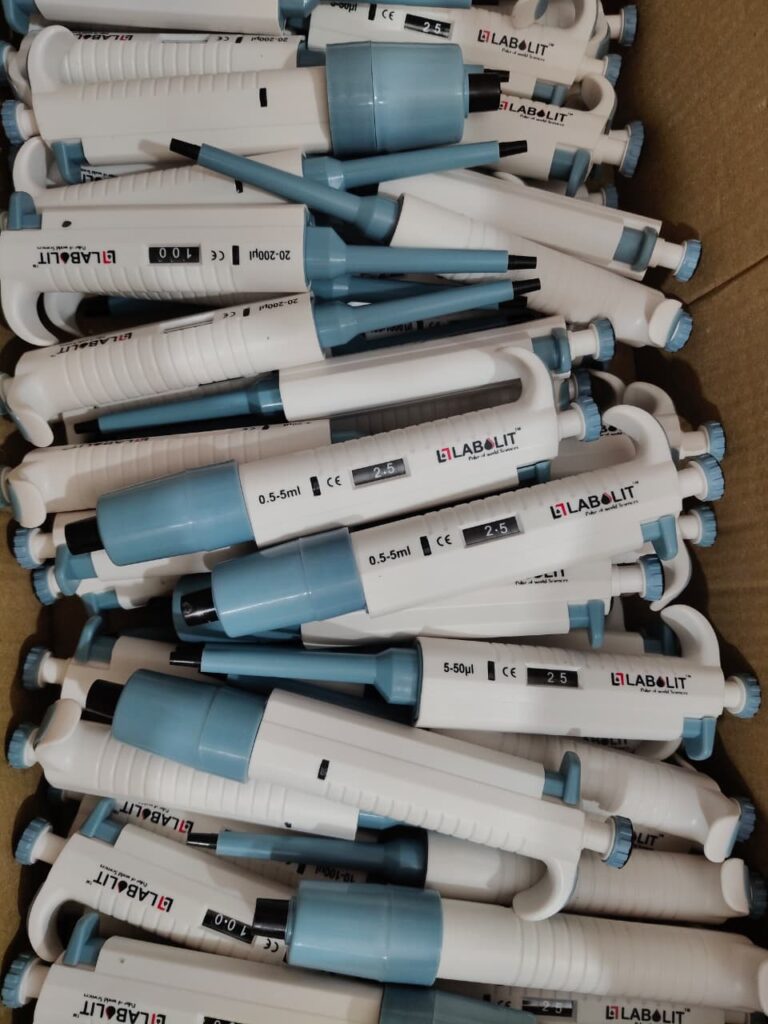
LABOLIT, a trusted brand of UMA SCIENTIFIC, offers high-quality micropipettes designed for accuracy, durability, and ergonomic comfort, making them suitable for routine and advanced laboratory applications.
Types of Micropipettes
Micropipettes can be classified based on different parameters such as number of channels, volume adjustment, and operating mechanism.
1. Based on Number of Channels
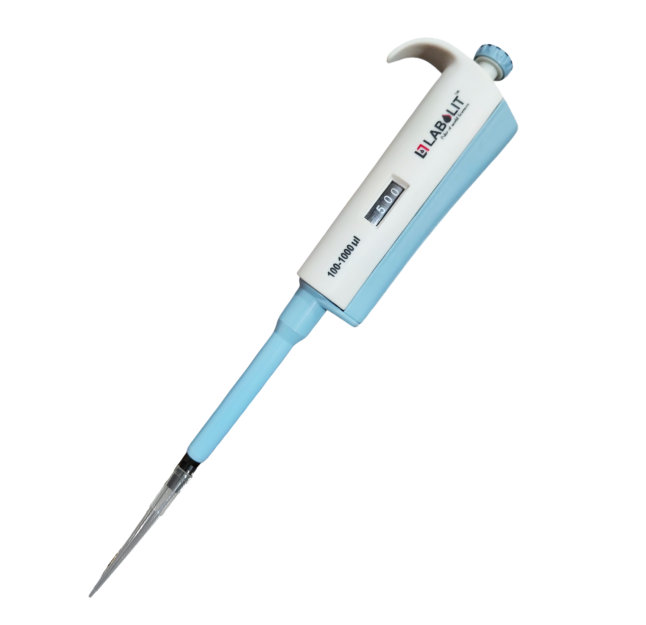
Single Channel Micropipettes
Single-channel micropipettes are designed to aspirate and dispense liquid through a single tip, allowing precise handling of one sample at a time. These are commonly used in routine laboratory procedures where accuracy and control are essential.
LABOLIT single-channel micropipettes are widely used in research, diagnostics, and quality control laboratories.
Multi-Channel Micropipettes
Multi-channel micropipettes are designed to handle multiple samples simultaneously. Commonly available in 8-channel and 12-channel configurations, they are ideal for high-throughput applications.
Applications include:
- ELISA assays
- PCR workflows
- Microplate-based experiments
LABOLIT multi-channel micropipettes help increase efficiency and reduce processing time while maintaining uniform accuracy across all channels.

2. Based on Volume Adjustment
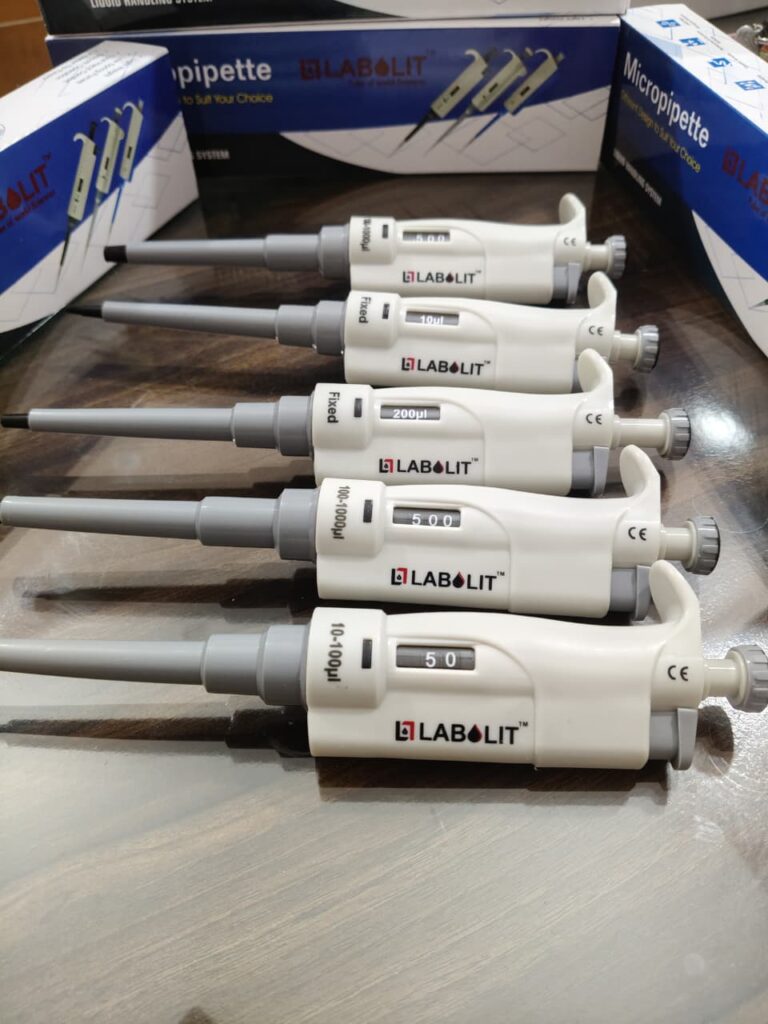
Fixed Volume Micropipettes
Fixed volume micropipettes are designed to dispense a single, predefined volume. Since there is no volume adjustment, they offer excellent consistency and repeatability.
Best suited for:
- Routine laboratory testing
- Quality control procedures
- Repetitive pipetting tasks

Variable Volume Micropipettes
Variable volume micropipettes allow users to select the required volume within a specified range using a manual adjustment dial. These are the most commonly used micropipettes in laboratories due to their flexibility.
LABOLIT variable volume micropipettes feature:
- Clear volume display
- Smooth adjustment mechanism
- Secure volume locking for stable measurements

3. Based on Operating Mechanism
Micropipettes operate on a piston-driven air displacement principle, where thumb pressure on the plunger controls aspiration and dispensing of liquid. This mechanism ensures reliable performance, precise control, and consistent results in daily laboratory use.
Components of a Micropipette
Plunger
The plunger is used to aspirate and dispense liquid. Pressing to the first stop aspirates the liquid, while pressing to the second stop (blow-out) ensures complete dispensing.
LABOLIT micropipettes are designed with a low-force plunger mechanism to reduce hand fatigue during prolonged use.
Volume Adjustment Dial
The volume adjustment dial allows precise control over the liquid volume by regulating piston movement. Accurate volume setting is essential for reproducible experimental results.
Tip Ejector
The tip ejector enables safe and hygienic removal of used pipette tips without direct hand contact, minimizing contamination risks.
Tip Cone (Shaft)
The tip cone ensures a secure and leak-proof fit for disposable pipette tips. LABOLIT micropipettes are compatible with standard laboratory tips, ensuring versatility and ease of use.
Calibration Screw
The calibration screw allows fine-tuning of dispensing accuracy. Periodic calibration ensures consistent performance and compliance with laboratory quality standards.
Applications of Micropipettes
Micropipettes are widely used across various laboratory disciplines, including:
- Molecular Biology
- Biochemistry
- Cell Culture
- Microbiology
- Analytical Chemistry
- Clinical Diagnostics
- Pharmaceutical Research
Accurate liquid measurement is critical for reproducibility and reliability in scientific research.
How Does a Micropipette Work?
Micropipettes function on the air displacement principle:
- Aspiration: Pressing the plunger creates a vacuum that draws liquid into the tip.
- Dispensing: Further pressing expels the liquid completely from the tip.
How to Use a Micropipette Correctly
Step 1: Select the Correct Micropipette and Tip
- Choose the appropriate volume range
- Use compatible disposable tips
- Set the desired volume accurately
Step 2: Attach the Pipette Tip
- Attach gently to ensure a proper seal
- Avoid excessive force
Step 3: Aspirate and Dispense
- Hold the micropipette vertically
- Pre-wet the tip 2–3 times
- Aspirate and dispense smoothly
Forward and Reverse Pipetting Techniques
Forward Pipetting
Used for most standard liquids.
- Press plunger to first stop
- Aspirate liquid
- Dispense to first stop
- Press to second stop to empty tip
Reverse Pipetting
Recommended for viscous or foaming liquids.
- Press plunger to second stop
- Aspirate liquid
- Dispense to first stop only
- Discard excess liquid
Calibration of Micropipettes
Calibration should be performed at:
- Maximum volume
- 50% of maximum volume
- Minimum volume
When is Calibration Required?
- Before first use
- At regular intervals (every 3–6 months)
- After servicing or repair
- When operating conditions change
- To meet quality or regulatory requirements
Cleaning and Maintenance of Micropipettes
External Cleaning
- Wipe with lint-free cloth
- Use isopropanol only
- Clean tip cone regularly
Internal Cleaning
- Should be done by trained personnel
- Clean piston, seals, and internal parts carefully
Storage
- Store micropipettes upright
- Inspect daily before use
- Perform periodic internal inspection
Choosing the Right Micropipette for Your Laboratory
Consider the following factors:
- Required volume range
- Accuracy and precision
- Tip compatibility
- Autoclavability
- Ergonomic design
- Calibration compliance
- ISO/CE standards
LABOLIT micropipettes are designed to provide reliable performance with user comfort in mind.
Why Choose LABOLIT Micropipettes by UMA SCIENTIFIC?
- High accuracy and precision
- Durable construction
- Ergonomic design
- Autoclavable lower part
- Universal tip compatibility
- Made in India
- Competitive pricing
- Trusted by laboratories across India
Conclusion
Micropipettes are essential tools for accurate and reproducible laboratory work. Selecting a reliable micropipette ensures consistency, efficiency, and confidence in experimental results.
LABOLIT Micropipettes by UMA SCIENTIFIC combine precision, durability, and affordability, making them a preferred choice for laboratories nationwide.
