




Laboratory Micropipette – Complete Guide for Accurate Liquid Handling in Modern Laboratories
LABOLIT Micropipette by UMA Scientific – Leading Micropipette Manufacturer in India
Introduction to Laboratory Micropipettes
Micropipettes are designed to measure and transfer very small volumes of liquid, typically in the microliter (µL) range. The accuracy and precision of these instruments make them indispensable for experiments where even the slightest deviation in liquid volume can affect results.
Modern laboratories depend heavily on high-precision liquid handling equipment to perform tasks such as DNA testing, PCR analysis, chemical assays, and medical diagnostics. Micropipettes ensure that researchers can conduct experiments with maximum reliability and repeatability.
In India, the demand for high-quality laboratory instruments is increasing rapidly. Among the trusted brands available today, LABOLIT Micropipettes manufactured by UMA Scientific have emerged as a reliable and cost-effective solution for laboratories across India.
This comprehensive guide explains everything about laboratory micropipettes including:
- Types of micropipettes
- Working principles
- Applications
- Calibration and maintenance
- Buying guide
- Price factors
- Best micropipette manufacturers
What is a Laboratory Micropipette?
A micropipette is a precision laboratory instrument used to measure and transfer extremely small volumes of liquid accurately. These devices are widely used in biological, chemical, pharmaceutical, and medical laboratories.
Micropipettes are capable of dispensing volumes ranging from:
- 0.1 µL
- 1 µL
- 10 µL
- 100 µL
- 1000 µL
This ability to measure tiny liquid volumes makes micropipettes essential for many scientific experiments.
Unlike traditional pipettes, micropipettes offer:
- High accuracy
- High precision
- Adjustable volumes
- Easy handling
- Reproducible results
History and Evolution of Micropipettes
The invention of the adjustable micropipette in the 1950s revolutionized laboratory science. Modern micropipettes now include:
- Digital volume adjustment
- Ergonomic design
- Improved accuracy
- Lightweight materials
- Multichannel technology
Today, micropipettes are an indispensable part of every laboratory workflow.
Types of Laboratory Micropipettes
There are several types of micropipettes designed for different laboratory applications.
Single Channel Micropipette
A single channel micropipette has one nozzle used for transferring liquid from one container to another.
It is the most commonly used micropipette in laboratories.
Applications include:
- Routine laboratory testing
- Chemical analysis
- PCR preparation
- Microbiology experiments
LABOLIT single channel micropipettes by UMA Scientific are widely used in:
- Pharmaceutical laboratories
- Hospitals
- Diagnostic centers
- Research institutions
Multichannel Micropipette
They are commonly used for:
- ELISA testing
- Microplate assays
- High-throughput screening
Multichannel pipettes significantly increase laboratory efficiency and reduce workload.
Fixed Volume Micropipette
A fixed volume micropipette delivers a predetermined liquid volume.
Advantages include:
- High precision
- Reduced user error
- Simple operation
These pipettes are often used in clinical and diagnostic laboratories.
Variable Volume Micropipette
Variable micropipettes allow users to adjust the liquid volume within a specific range.
Common ranges include:
- 0.1–2 µL
- 2–20 µL
- 20–200 µL
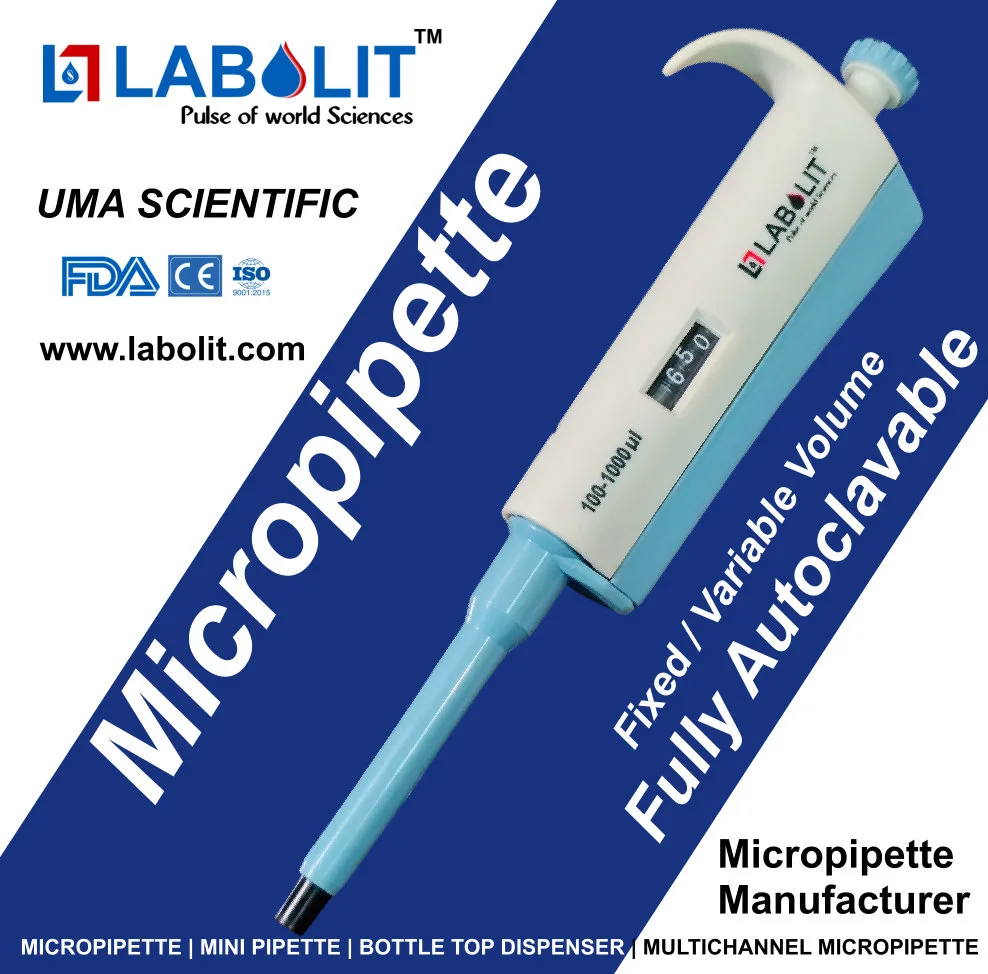
- 100–1000 µL
Variable micropipettes are widely used in research laboratories and biotechnology facilities.
Components of a Micropipette
A micropipette consists of several important components that ensure accurate liquid handling.
Plunger
Used to aspirate and dispense liquid.
Volume Adjustment Knob
Allows the user to set the required volume.
Volume Display
Shows the selected volume.
Tip Cone
The part where the pipette tip is attached.
Tip Ejector
Used to remove disposable tips without touching them.
Pipette Tip
Disposable plastic tips used to transfer liquids.
How Micropipettes Work
Most micropipettes operate using the air displacement principle.
Steps involved:
- The plunger is pressed.
- Air is displaced inside the pipette.
- When the plunger is released, liquid is drawn into the tip.
- Pressing the plunger again dispenses the liquid.
This mechanism allows extremely precise liquid transfer.
Applications of Laboratory Micropipettes
Micropipettes are used in a wide variety of scientific and industrial applications.
Pharmaceutical Industry
Micropipettes are used for:
- Drug formulation
- Quality control testing
- Chemical analysis
Biotechnology Research
Biotechnology labs use micropipettes for:
- DNA extraction
- PCR experiments
- Genetic research
Diagnostic Laboratories
Micropipettes are essential for:
- Blood testing
- Sample preparation
- Medical diagnostics
Academic Laboratories
Universities and colleges use micropipettes for:
- Chemistry experiments
- Biology practical work
- Microbiology research
Food and Environmental Testing
Micropipettes help detect contamination and ensure safety standards.
How to Use a Micropipette Correctly
Proper usage is essential for accurate results.
Step 1 – Select the Correct Volume Range
Choose a micropipette suitable for the required liquid volume.
Step 2 – Attach a Pipette Tip
Securely attach a disposable pipette tip.
Step 3 – Press the Plunger to First Stop
This prepares the pipette for liquid aspiration.
Step 4 – Aspirate Liquid
Insert the tip into the liquid and slowly release the plunger.
Step 5 – Dispense Liquid
Press the plunger to the second stop to release the liquid completely.
Step 6 – Dispose the Tip
Eject the used tip safely.
Micropipette Calibration
Calibration ensures that micropipettes deliver accurate liquid volumes.
Laboratories typically calibrate micropipettes every:
- 3 months
- 6 months
- 12 months
Micropipette Maintenance
Proper maintenance increases the lifespan of micropipettes.
Important maintenance steps include:
- Regular cleaning
- Periodic calibration
- Replacing worn seals
- Proper storage
Proper care ensures consistent performance and long-term reliability.
Factors Affecting Micropipette Accuracy
Several factors influence micropipette accuracy.
User Technique
Incorrect handling can lead to inaccurate results.
Temperature
Temperature variations affect liquid volume.
Pipette Tips
Low-quality tips can reduce accuracy.
Calibration
Uncalibrated pipettes produce inaccurate measurements.
Choosing the Best Micropipette for Your Laboratory
When buying a micropipette, consider the following factors:
- Accuracy and precision
- Volume range
- Ergonomic design
- Durability
- Manufacturer reputation
- Service and support
Selecting a reliable manufacturer ensures long-term performance.
LABOLIT Micropipettes by UMA Scientific
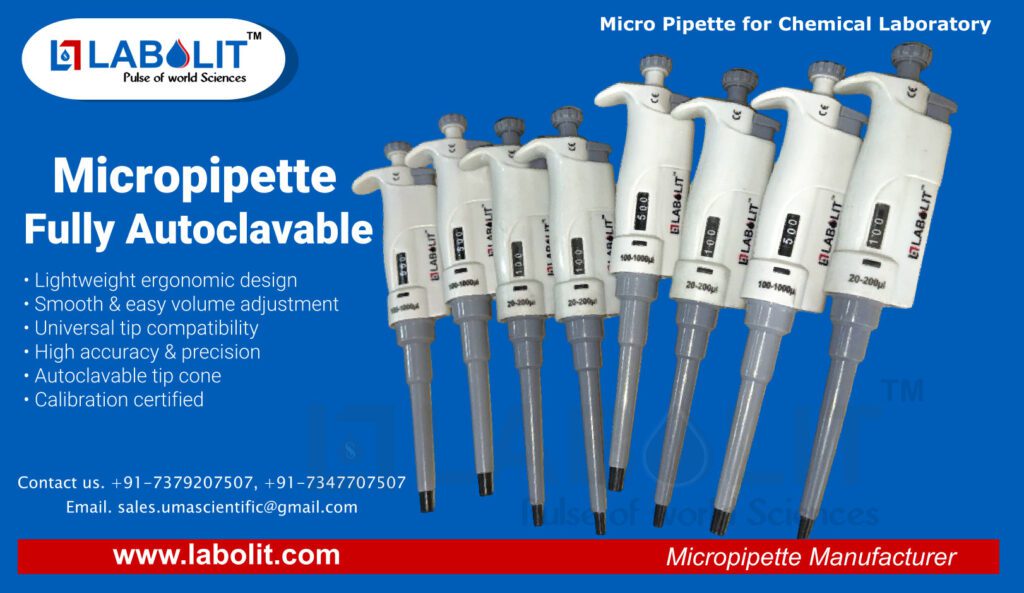
LABOLIT Micropipettes manufactured by UMA Scientific are becoming increasingly popular among laboratories in India.
Key features include:
✔ High accuracy and precision
✔ Ergonomic lightweight design
✔ Durable internal mechanism
✔ Easy volume adjustment
✔ Competitive pricing
✔ Compatible with standard tips
UMA Scientific supplies micropipettes to:
- Pharmaceutical companies
- Hospitals
- Diagnostic laboratories
- Research institutes
- Universities
Micropipette Price in India
The price of micropipettes depends on several factors:
- Brand
- Volume range
- Type (single or multichannel)
- Build quality
Typical price ranges in India:
Single Channel Micropipette
₹2,000 – ₹12,000
Multichannel Micropipette
₹10,000 – ₹40,000
High-precision laboratory micropipettes from manufacturers like UMA Scientific LABOLIT brand provide a cost-effective alternative to expensive imported brands.
Why Choose UMA Scientific Micropipettes
UMA Scientific is known as a trusted micropipette manufacturer in India.
Advantages include:
- High-quality manufacturing
- Affordable pricing
- Reliable performance
- Nationwide distribution
- Strong customer support
LABOLIT micropipettes are widely used across major cities and laboratory markets in India.
Future of Micropipettes in Laboratory Science
Advances in biotechnology and diagnostics are increasing the demand for precision liquid handling.
Future innovations include:
- Electronic micropipettes
- Automated liquid handling systems
- Smart calibration technologies
Micropipettes will continue to play a vital role in scientific discoveries and medical advancements.
Frequently Asked Questions (FAQ)
What is a micropipette used for?
A micropipette is used to measure and transfer small liquid volumes accurately in laboratory experiments.
What is the range of micropipettes?
Micropipettes can measure volumes from 0.1 µL to 1000 µL depending on the model.
How often should micropipettes be calibrated?
Most laboratories calibrate micropipettes every 6 to 12 months.
What industries use micropipettes?
Micropipettes are used in:
- Pharmaceutical labs
- Biotechnology research
- Diagnostic laboratories
- Academic institutions
Which is the best micropipette manufacturer in India?
Several manufacturers exist, but LABOLIT Micropipettes by UMA Scientific are gaining popularity due to their quality, precision, and affordability.
Conclusion
The laboratory micropipette is one of the most important tools in modern scientific laboratories. Its ability to measure extremely small liquid volumes with high accuracy makes it indispensable for research, diagnostics, and pharmaceutical development.
As laboratory technologies continue to evolve, the demand for reliable micropipettes will continue to grow.
Manufacturers like UMA Scientific with the LABOLIT micropipette brand are helping laboratories access high-quality liquid handling instruments at competitive prices.
Choosing the right micropipette ensures accurate results, efficient laboratory workflow, and reliable scientific research.
