

Leading Micropipette & Scientific Lab, Medical instrument Manufacturer and Deler A Legacy Of Scientific Precision .


Leading Micropipette & Scientific Lab, Medical instrument Manufacturer and Deler A Legacy Of Scientific Precision .
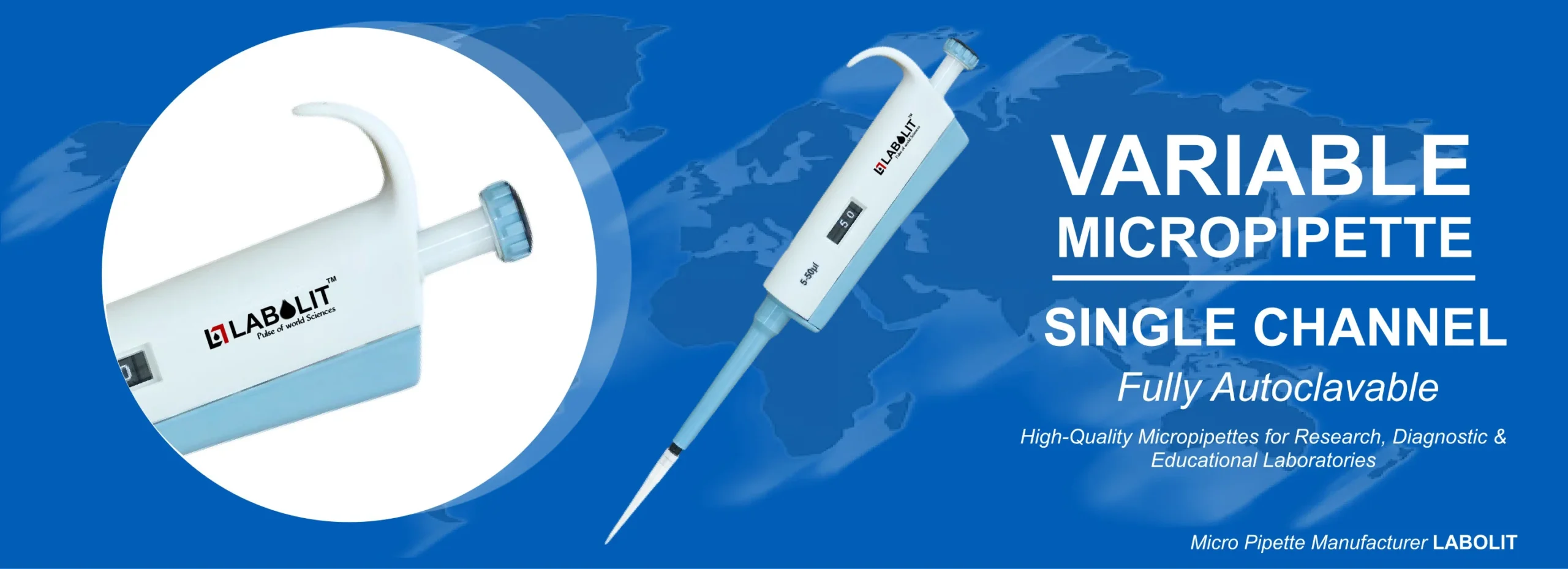
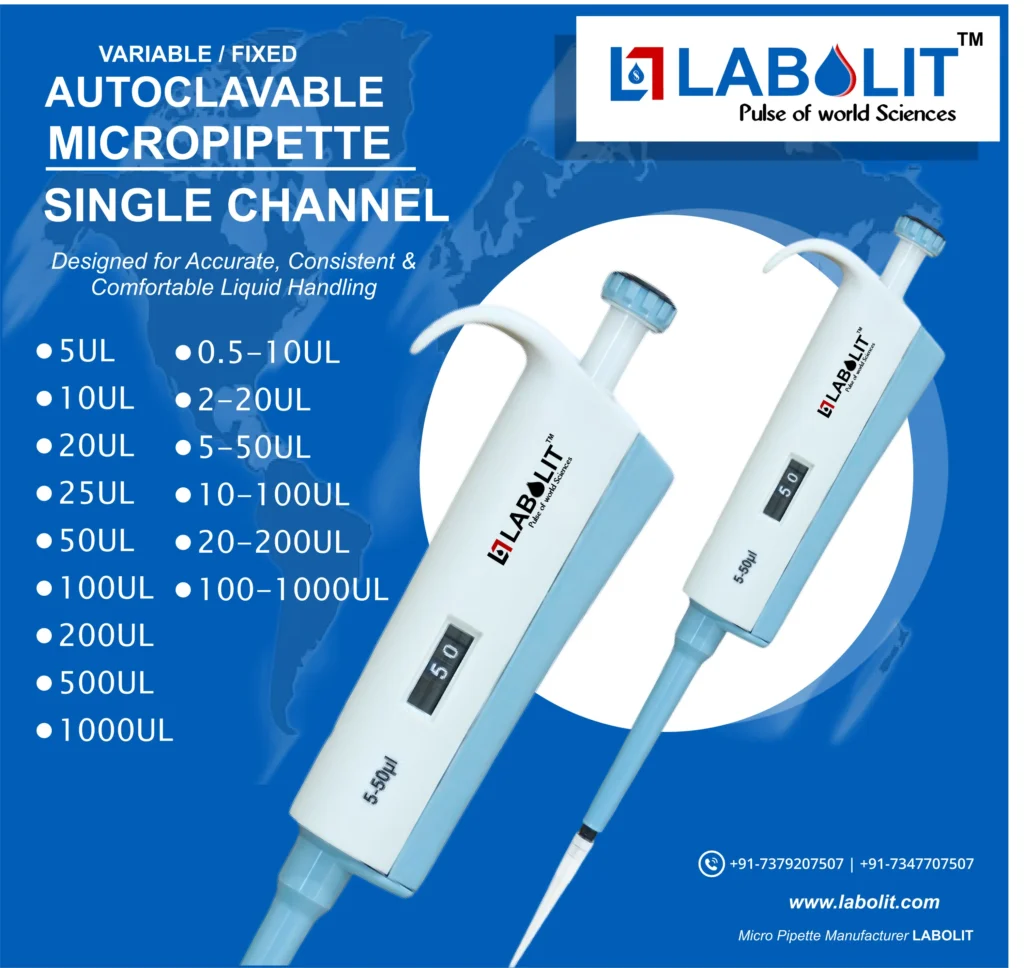
As laboratory standards and hygiene requirements continue to evolve, the demand for high-quality, easy-to-maintain and fully autoclavable micropipettes is increasing. Laboratories in Dubai, Abu Dhabi, Sharjah, Ajman, Ras Al Khaimah and other parts of the United Arab Emirates require dependable liquid handling instruments that support routine laboratory procedures and effective contamination-control practices.
If you are searching online for a fully autoclavable micropipette supplier in UAE, micropipette manufacturer, laboratory micropipette supplier, single-channel micropipette or precision liquid handling equipment, understanding the product’s features, applications and selection criteria can help you make an informed purchasing decision.
A micropipette is a laboratory instrument used to measure, aspirate and dispense small volumes of liquid with a high degree of precision. It is commonly used in laboratories where accurate liquid transfer is necessary for experiments, testing, sample preparation and scientific research.
Unlike micropipettes with only autoclavable lower components, a fully autoclavable model is designed so that the complete pipette can undergo the specified autoclaving process, subject to the manufacturer’s instructions.
This feature can be particularly useful in laboratories that regularly handle biological samples, sensitive reagents and other materials where contamination control is important.
A fully autoclavable micropipette generally combines several important characteristics:
Before purchasing a micropipette, users should always verify whether the entire instrument is autoclavable or whether only selected components, such as the lower assembly or tip cone, are suitable for autoclaving.
Laboratory cleanliness and contamination control are important in applications involving biological materials, chemical solutions, diagnostic samples and research reagents.
Micropipettes are frequently handled by laboratory personnel and come into contact with different samples and liquids through their tips. Proper cleaning, disinfection and sterilization procedures help laboratories maintain suitable working conditions.
Fully autoclavable micropipettes provide an additional cleaning and sterilization option when the instrument is designed and approved for the process.
Contamination can affect laboratory results, sample integrity and experimental consistency. Using suitable sterilization procedures helps reduce the risk of transferring unwanted microorganisms or residues between laboratory activities.
A fully autoclavable micropipette can support laboratory contamination-control procedures by allowing the instrument to undergo manufacturer-approved steam sterilization.
Laboratories that already use autoclaves can benefit from equipment specifically designed for steam sterilization.
Instead of relying exclusively on external surface cleaning, compatible micropipettes can be processed using the recommended autoclaving procedure.
Fully autoclavable micropipettes can be used in several laboratory environments, including:
The appropriate model should always be selected according to the liquid volume, application and laboratory procedure.
A well-designed micropipette should be easy to handle, clean and maintain. Fully autoclavable models provide another maintenance option when supported by the instrument’s construction and operating instructions.
Regular inspection, cleaning, calibration and performance verification remain important even when an instrument is autoclavable.
Laboratories often establish internal cleaning and sterilization schedules for reusable equipment. A fully autoclavable micropipette can be incorporated into those procedures when the manufacturer confirms compatibility.
The product range includes different volume capacities to accommodate small-volume and larger-volume liquid handling tasks.
LABOLIT focuses on important product characteristics such as:
The correct product should be selected according to its individual model specifications and the requirements of the laboratory.
For laboratory equipment dealers, distributors and scientific suppliers in the UAE, LABOLIT also provides an opportunity to explore business enquiries and OEM/private-label requirements.
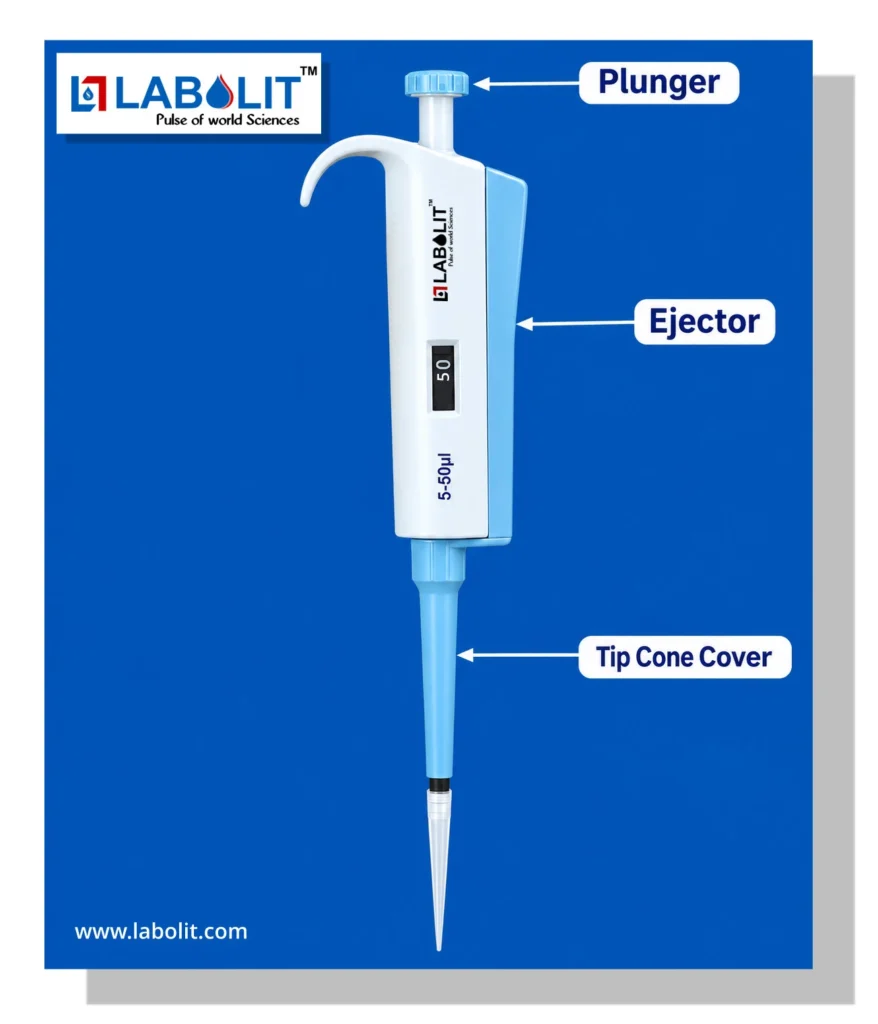
One of the most important factors when selecting a micropipette is its volume range.
Different laboratory procedures require different liquid quantities. Selecting an appropriate micropipette range helps users perform liquid transfer operations more conveniently.
LABOLIT’s fully autoclavable single-channel micropipette range includes the following volume options:
The 0.5–10 µL micropipette is designed for applications involving very small liquid volumes.
It can be useful in molecular biology, biotechnology, research and analytical laboratory procedures where small quantities of liquids need to be transferred.
Typical applications may include reagent preparation, sample handling and experimental procedures requiring microlitre-level liquid transfer.
The 2–20 µL micropipette is suitable for laboratories that frequently work with small liquid volumes.
It can support applications involving reagent preparation, sample dilution, biochemical procedures and research activities.
The 5–50 µL micropipette provides a wider working range for small-volume liquid handling.
It is suitable for different laboratory procedures where accurate transfer of small liquid quantities is required.
The 10–100 µL micropipette is a commonly useful range for laboratory sample preparation and routine liquid handling.
It can be used in diagnostic, pharmaceutical, research and educational laboratory environments.
The 20–200 µL micropipette is designed for medium-small liquid volumes.
It is useful for routine laboratory applications such as reagent transfer, sample preparation, dilution procedures and experimental work.
The 50–500 µL micropipette supports applications that require larger liquid quantities than conventional small-volume models.
It can be used in research laboratories, pharmaceutical laboratories and other scientific facilities.
The 100–1000 µL micropipette is designed for transferring volumes up to 1 ml.
It is suitable for routine laboratory sample preparation, reagent handling, analytical procedures and other applications requiring higher liquid volumes.
Availability and autoclavability should be confirmed for the particular model before ordering.
A single-channel micropipette contains one dispensing channel and is designed to transfer liquid through one micropipette tip at a time.
It is one of the most widely used liquid handling instruments in laboratories because it provides flexibility across different experimental procedures.
Single-channel micropipettes are suitable for:
The availability of different volume ranges allows laboratories to choose suitable instruments for their daily activities.
A fully autoclavable single-channel micropipette is especially useful where the complete instrument is required to undergo a manufacturer-approved steam sterilization procedure.
Understanding the difference between fully autoclavable and semi-autoclavable micropipettes is important before purchasing laboratory equipment.
Although both types are used for precision liquid handling, their sterilization capabilities may differ.
A fully autoclavable micropipette is designed to withstand the specified autoclaving procedure for the complete instrument.
Depending on the model, this can make the sterilization process more convenient because users do not need to separate the autoclavable lower assembly from the upper body.
However, the precise procedure, temperature, pressure and exposure time must always follow the manufacturer’s instructions.
A semi-autoclavable micropipette generally allows selected components to be autoclaved rather than the complete instrument.
For example, certain models permit sterilization of the lower assembly or tip cone while the upper body must be cleaned separately.
Users should never assume that every micropipette can undergo full steam sterilization.
The right choice depends on the laboratory’s cleaning requirements, sample types and working environment.
A fully autoclavable micropipette may be preferable when complete-instrument steam sterilization is required and supported by the manufacturer.
A semi-autoclavable model may be suitable when sterilization of the liquid-contacting components is sufficient for the laboratory’s procedures.
Always check the model-specific product documentation before making a purchase.
Selecting a micropipette involves more than choosing a volume range. Several design and technical features influence its suitability for laboratory use.
Accuracy describes how closely the dispensed volume matches the selected or intended volume.
It is an important factor in applications where precise liquid transfer is required.
Buyers should review the manufacturer’s stated accuracy specifications for each volume range.
Precision refers to the consistency of repeated dispensing operations.
A precise micropipette should deliver consistent results when used correctly under the specified operating conditions.
Laboratory personnel may use micropipettes repeatedly throughout the working day.
An ergonomic design can help make routine operation more comfortable.
Important design considerations include:
A clear volume display allows users to identify the selected liquid volume easily.
This is particularly useful when laboratories use multiple micropipettes with different working ranges.
The volume adjustment system should be easy to operate and provide a clear indication of the selected setting.
A well-designed adjustment mechanism helps users work efficiently and reduces the risk of selecting an unintended volume.
The materials and internal construction must be suitable for the specified sterilization process.
The manufacturer should clearly identify whether the complete instrument can be autoclaved.
Laboratories work with different reagents, solvents and cleaning solutions.
Users should check material compatibility before exposing a micropipette to particular chemicals or disinfectants.
Chemical resistance should not be assumed for every substance.
Calibration is important for maintaining measurement reliability.
A micropipette should be checked according to the laboratory’s quality management requirements and the manufacturer’s recommended schedule.
The UAE has a diverse laboratory and healthcare sector involving medical diagnostics, pharmaceutical activities, academic research, industrial testing and scientific services.
Fully autoclavable micropipettes can support several types of laboratory operations when selected according to the application.
Diagnostic laboratories handle different types of patient samples and reagents.
Micropipettes are used for accurate liquid transfer during testing procedures, sample preparation and diagnostic workflows.
A suitable fully autoclavable model can be incorporated into the laboratory’s approved contamination-control procedures.
Pathology laboratories perform routine testing and sample analysis.
Micropipettes help laboratory personnel transfer controlled quantities of liquids during preparation and testing procedures.
Different volume ranges can support different laboratory requirements.
Pharmaceutical laboratories perform research, quality control, formulation development and analytical testing.
Accurate liquid handling is important during reagent preparation, sample dilution and experimental procedures.
Fully autoclavable micropipettes may be useful in pharmaceutical environments where compatible equipment sterilization is required.
Biotechnology laboratories frequently work with biological samples, reagents and experimental materials.
Micropipettes are essential for transferring small liquid volumes during research and laboratory testing.
The ability to sterilize compatible instruments can support laboratory hygiene procedures.
Molecular biology procedures often involve small-volume liquid transfers.
Micropipettes are commonly used for reagent preparation, sample handling and experimental workflows.
Appropriate cleaning and contamination-control procedures are particularly important in these environments.
Research facilities use micropipettes for experimental preparation, analytical procedures and scientific investigation.
Different volume ranges provide flexibility for handling different sample quantities.
Universities, colleges and training institutions use micropipettes for laboratory teaching, practical sessions and scientific demonstrations.
Single-channel micropipettes are useful for introducing students to precision liquid handling techniques.
Quality control laboratories perform routine testing and analytical procedures.
Accurate liquid dispensing is important for consistent preparation of reagents, standards and test samples.
Industrial laboratories may require micropipettes for sample preparation, chemical testing and quality assessment.
Selecting the correct volume range and material compatibility is essential.
The United Arab Emirates has a growing demand for scientific equipment across medical, pharmaceutical, educational and industrial sectors.
Laboratories require instruments that support reliable operation, convenient maintenance and consistent results.
When searching for a micropipette supplier in UAE, customers should consider several important factors.
A reliable supplier should be able to help buyers identify appropriate micropipette models and volume ranges.
The availability of single-channel, multichannel, fixed-volume and variable-volume options can be important for laboratories with different requirements.
Technical details should be available before purchase.
These include:
Micropipettes are precision instruments, so buyers should evaluate product specifications, quality documentation and calibration support.
Clear product guidance helps laboratory users select and operate the appropriate instrument.
Laboratory equipment distributors and dealers may also require bulk purchasing, OEM opportunities and consistent product supply.
A supplier relationship should be evaluated according to actual availability, commercial terms and service arrangements.
LABOLIT, powered by UMA SCIENTIFIC, provides liquid handling equipment for laboratories and scientific applications.
The LABOLIT fully autoclavable single-channel micropipette range is designed for laboratories looking for practical liquid handling solutions in different volume capacities.
The product range is relevant to buyers searching for:
LABOLIT also welcomes business enquiries from laboratory equipment dealers, distributors, wholesalers and companies interested in OEM or private-label arrangements.
For UAE buyers, product availability, shipping arrangements, delivery timelines and applicable commercial terms should be confirmed directly before placing an order.
Choosing the right micropipette requires an understanding of the laboratory procedure and the volume of liquid that needs to be transferred.
A micropipette should generally be selected so that the required volume falls within its specified operating range.
For example:
Laboratories should consider the required volume, measurement accuracy, liquid properties and instrument specifications.
Using an appropriate volume range helps support consistent liquid handling practices.
Accuracy and precision are two important technical characteristics of a micropipette.
Although these terms are sometimes used interchangeably, they describe different aspects of instrument performance.
Accuracy indicates how close a measured or dispensed volume is to the intended volume.
For example, when a user selects a particular volume, accuracy describes how closely the delivered volume matches that setting.
Precision indicates how closely repeated dispensing results agree with one another.
A micropipette can produce repeatable results, but its accuracy must also be evaluated.
Both characteristics are essential for laboratory work.
Poor accuracy can affect the actual amount of liquid transferred, while poor precision can cause variation between repeated measurements.
Buyers should always review the stated accuracy and precision values for the selected micropipette model and volume range.
Micropipette tips are important accessories used during liquid aspiration and dispensing.
The correct tip must fit the micropipette securely and be compatible with the selected instrument.
Important considerations include:
Using unsuitable tips may affect dispensing consistency and can cause leakage or other operating problems.
Laboratories should follow the instrument manufacturer’s recommendations when selecting compatible micropipette tips.
Correct operating technique is essential for maintaining reliable liquid transfer.
Even a high-quality micropipette may produce inconsistent results if it is not used properly.
Before starting, identify the required liquid volume and select a micropipette with an appropriate operating range.
Set the required volume using the instrument’s adjustment mechanism.
Always ensure the selected setting is within the specified range.
Fit a compatible micropipette tip securely onto the tip cone.
Avoid touching the tip opening with bare hands or contaminated surfaces.
Hold the micropipette in the recommended position and operate the plunger according to the manufacturer’s instructions.
Allow the liquid to enter the tip smoothly.
Transfer the liquid into the receiving vessel using the recommended dispensing technique.
Avoid sudden movements that may cause splashing or inconsistent delivery.
Use the tip ejector to remove the used tip safely.
Dispose of the tip according to the laboratory’s waste management procedures.
After use, clean and store the micropipette according to the manufacturer’s instructions.
Autoclaving is a steam sterilization process used for compatible laboratory equipment.
However, not all micropipettes can withstand the same temperature, pressure and exposure time.
A fully autoclavable micropipette must be processed according to its specific user manual.
Some manufacturers specify steam sterilization at 121°C for approximately 20 minutes for compatible models. Other models may require different procedures or preparation steps.
For example, Sartorius provides specific autoclaving guidance for its compatible mechanical pipettes, including cooling, drying and post-autoclaving performance checks. Thermo Fisher Scientific also emphasizes following the instrument-specific sterilization instructions.
Therefore, the following precautions are important:
Never assume that a micropipette is fully autoclavable simply because its lower assembly or tip cone can be sterilized.
Regular maintenance helps preserve the reliability and usability of laboratory instruments.
Micropipettes should be inspected and maintained according to their manufacturer’s instructions and the laboratory’s quality management system.
Users should periodically inspect the micropipette for:
Calibration verification helps determine whether the micropipette continues to meet its required performance specifications.
Laboratories should establish suitable calibration intervals based on usage, risk, quality requirements and manufacturer recommendations.
External surfaces should be cleaned using compatible cleaning materials.
Avoid using chemicals that may damage the instrument’s housing, seals or internal components.
Store micropipettes in a suitable stand or storage arrangement when they are not being used.
Avoid unnecessary exposure to dust, moisture, direct heat and chemical vapours.
If a micropipette shows inconsistent results, leakage or mechanical problems, it should be inspected by a qualified service professional.
Dubai is an important commercial centre for scientific equipment, medical supplies and laboratory products.
Laboratories, hospitals, pharmaceutical companies and scientific equipment distributors may require different types of micropipettes for their operations.
When searching for a fully autoclavable micropipette supplier in Dubai, customers should evaluate the available product range, technical documentation, purchasing support and delivery arrangements.
LABOLIT aims to serve laboratory equipment buyers looking for single-channel fully autoclavable micropipettes and other liquid handling solutions.
Whether you are purchasing for a diagnostic laboratory, research centre, educational institution or scientific equipment distribution business, selecting the correct micropipette model is essential.
Abu Dhabi has laboratory requirements across healthcare, research, pharmaceutical and educational sectors.
Micropipettes are used in different laboratory procedures involving accurate liquid transfer, sample preparation and analytical work.
A suitable fully autoclavable micropipette can support approved sterilization and contamination-control procedures.
Laboratories in Abu Dhabi should evaluate product specifications, volume ranges, calibration documentation and model-specific autoclaving instructions before purchasing.
LABOLIT welcomes enquiries from UAE laboratory equipment buyers interested in its liquid handling product range.
Sharjah has educational, industrial, scientific and healthcare facilities that use laboratory equipment for different applications.
Laboratory equipment distributors and dealers may also require reliable micropipette products for their customers.
LABOLIT provides a range of liquid handling products and welcomes business enquiries from laboratory equipment suppliers interested in fully autoclavable micropipettes.
The correct model can be selected according to the required volume capacity, operating conditions and laboratory requirements.
Laboratory equipment is required across different locations in the UAE, including Ajman, Ras Al Khaimah, Fujairah and Umm Al Quwain.
Different types of laboratories may require micropipettes for diagnostic testing, pharmaceutical research, academic activities and scientific analysis.
When sourcing micropipettes, buyers should consider product quality, specifications, supplier support and delivery arrangements.
LABOLIT welcomes enquiries from laboratory equipment distributors, dealers and end users across the UAE.
Laboratory equipment dealers and distributors require products that meet customer expectations and support long-term business relationships.
Micropipettes are important products within the laboratory liquid handling category.
LABOLIT offers business opportunities for dealers and distributors interested in laboratory equipment and liquid handling products.
A wider product selection allows dealers to serve different laboratory requirements.
LABOLIT’s liquid handling category includes single-channel micropipettes, multichannel micropipettes and bottle top dispensers.
OEM and private-label arrangements can help laboratory equipment businesses develop products under their own brand identity.
LABOLIT welcomes enquiries regarding OEM requirements, product specifications and commercial arrangements.
Dealers and distributors may require multiple units for inventory and customer supply.
Bulk purchasing requirements can be discussed directly with the company.
LABOLIT aims to connect with laboratory equipment distributors, scientific suppliers, wholesalers and business partners interested in liquid handling products.
Before purchasing a fully autoclavable micropipette, buyers should evaluate the following points.
Check whether the complete instrument is autoclavable or only specific components.
Choose a micropipette that covers the liquid volumes used in your laboratory.
Compare the technical specifications provided for the selected model.
Ensure that suitable micropipette tips are available and compatible.
Confirm whether an individual calibration certificate or other relevant documentation is supplied.
Review the warranty coverage, exclusions and service arrangements before purchase.
For UAE buyers purchasing from an international supplier, confirm shipping costs, delivery timelines, customs requirements and applicable taxes.
Make sure that product instructions and maintenance guidance are available.
Do not select a micropipette based only on appearance or price. Compare its technical features with the actual laboratory requirements.
A micropipette is a precision instrument that requires proper care, calibration and maintenance. Consider these requirements when choosing a supplier.
Micropipettes have become essential instruments in laboratories because they allow users to transfer controlled quantities of liquids.
Their applications extend across different scientific disciplines.
In molecular biology, micropipettes help researchers prepare reaction mixtures and transfer reagents.
In microbiology, they are used for sample preparation and controlled liquid transfer.
In pharmaceutical research, they support analytical procedures and experimental preparation.
In clinical diagnostics, they are used in laboratory testing workflows.
In educational laboratories, they help students understand precise measurement and liquid handling techniques.
Because of these varied applications, choosing the correct micropipette is an important part of laboratory equipment planning.
Laboratory quality management involves maintaining suitable procedures, equipment and documentation to support reliable results.
Micropipettes contribute to this process because liquid transfer accuracy can influence testing and research outcomes.
A suitable quality management approach may include:
Fully autoclavable micropipettes can be included in laboratory sterilization procedures when their manufacturer-approved specifications permit it.
It is important to remember that autoclavability alone does not guarantee accuracy or compliance with any laboratory quality standard. Calibration, verification, proper operation and documentation are also necessary.
Even experienced laboratory personnel should follow proper pipetting practices.
Some common mistakes include:
Using a micropipette outside its specified volume range may affect measurement reliability and can damage the instrument.
Incorrect tips can result in poor fitting, leakage or inconsistent liquid transfer.
Forceful plunger operation may affect the dispensing process and user comfort.
A micropipette that has not been checked regularly may no longer meet its required performance specifications.
Using an unapproved temperature, pressure or sterilization cycle may damage the instrument.
Leaving micropipettes exposed to contamination, dust or unsuitable environmental conditions may affect their condition.
Regular cleaning and inspection are important for long-term instrument usability.
LABOLIT, powered by UMA SCIENTIFIC, focuses on laboratory liquid handling equipment and scientific instruments.
The brand aims to support different laboratory requirements through its product range and business-oriented supply approach.
Its liquid handling products include:
These products serve different liquid handling and laboratory organization requirements.
For customers in the UAE, the appropriate product should be selected according to the required volume range, sterilization needs, technical specifications and availability.
LABOLIT also welcomes enquiries from scientific equipment dealers, wholesalers, distributors and OEM customers.
A fully autoclavable micropipette is designed to withstand the manufacturer’s specified steam sterilization process for the complete instrument. It helps laboratories incorporate suitable sterilization procedures into their equipment maintenance practices.
A fully autoclavable micropipette is designed for sterilization of the complete instrument. A semi-autoclavable micropipette generally allows only selected components, such as the lower assembly or tip cone, to undergo autoclaving.
No. Autoclavability depends on the instrument’s construction and manufacturer specifications. Some models allow complete-instrument sterilization, while others permit sterilization of only selected components.
Common volume ranges include 0.5–10 µL, 2–20 µL, 5–50 µL, 10–100 µL, 20–200 µL, 50–500 µL and 100–1000 µL. Larger-volume options may also be available depending on the model.
A single-channel micropipette transfers liquid through one tip at a time. It is commonly used in research, diagnostic, pharmaceutical, biotechnology and educational laboratories.
Laboratories use fully autoclavable micropipettes when they require instruments that can undergo manufacturer-approved steam sterilization as part of their contamination-control procedures.
Accuracy indicates how closely the dispensed liquid volume matches the selected volume. It is important for reliable sample preparation, reagent transfer and laboratory testing.
Precision describes the consistency of repeated liquid dispensing operations. Good precision helps reduce variation between repeated measurements.
Calibration intervals depend on usage, laboratory quality requirements, risk assessment and manufacturer recommendations. Laboratories should establish suitable calibration schedules and perform additional checks when necessary.
Yes, suitable models can be used for liquid handling in pharmaceutical laboratories. Their use and sterilization must follow the laboratory’s procedures and the manufacturer’s specifications.
They can be suitable for pathology laboratory applications involving accurate liquid transfer and sample preparation, provided the selected model meets the laboratory’s requirements.
The volume adjustment mechanism allows users to select the required liquid volume within the instrument’s specified operating range.
Accessories and packaging contents vary by model and supplier. Buyers should confirm the included accessories before placing an order.
Micropipettes should be stored in a suitable stand or storage arrangement, following manufacturer recommendations. They should be protected from dust, contamination, moisture and unsuitable environmental conditions.
Buyers should check the volume range, accuracy, precision, full autoclavability, tip compatibility, calibration documentation, warranty and delivery arrangements.
Yes, an appropriate model can be used for liquid handling in biotechnology laboratories. The selected volume range and sterilization procedure should match the application.
A fixed-volume micropipette is designed to dispense a specific predetermined volume. A variable-volume micropipette allows users to select different volumes within its specified operating range.
No. Autoclaving is a sterilization process, whereas calibration evaluates measurement performance. A micropipette may require performance verification after sterilization according to its manufacturer’s instructions.
Micropipettes can handle many laboratory liquids when the instrument, tip and liquid are compatible. Highly viscous, volatile, corrosive or otherwise challenging liquids may require special techniques or dedicated instruments.
Look for a supplier that provides clear technical specifications, suitable product documentation, product availability information, purchasing support and appropriate warranty or service arrangements.
LABOLIT offers single-channel micropipette models in different volume ranges. Buyers should confirm the required model and its specifications before ordering.
LABOLIT’s broader product range includes 8-channel and 12-channel micropipettes for applications requiring simultaneous liquid transfer through multiple channels. Autoclavability should be confirmed for the specific model.
Yes. LABOLIT welcomes OEM and private-label business enquiries from laboratory equipment dealers, distributors and scientific suppliers. Specific arrangements are subject to discussion and confirmation.
Bulk purchase enquiries can be discussed with LABOLIT. Buyers should provide their required models, volume ranges and quantities to obtain relevant commercial information.
LABOLIT offers a range of laboratory liquid handling products, including single-channel micropipettes, multichannel micropipettes and bottle top dispensers. The brand focuses on practical laboratory solutions and welcomes enquiries from dealers, distributors and laboratory equipment buyers.
Choosing the right fully autoclavable micropipette is an important decision for laboratories that require accurate liquid handling, convenient maintenance and suitable sterilization options.
From small-volume applications to larger liquid transfer requirements, selecting the correct micropipette volume range can help laboratories establish efficient and consistent working procedures.
Before purchasing, buyers should carefully evaluate accuracy, precision, volume capacity, ergonomic design, tip compatibility, calibration requirements and manufacturer-approved autoclaving instructions.
LABOLIT, powered by UMA SCIENTIFIC, offers liquid handling solutions for laboratories, scientific equipment dealers, distributors and business customers.
If you are searching for a fully autoclavable micropipette supplier in UAE, single-channel micropipette, variable-volume micropipette or laboratory liquid handling equipment, explore the LABOLIT product range and enquire about suitable models for your requirements.
LABOLIT – Pulses of World Science. Powered by UMA SCIENTIFIC.
Website: https://labolit.com/
